




Top 10 Home Workout Routines With Zero Equipment
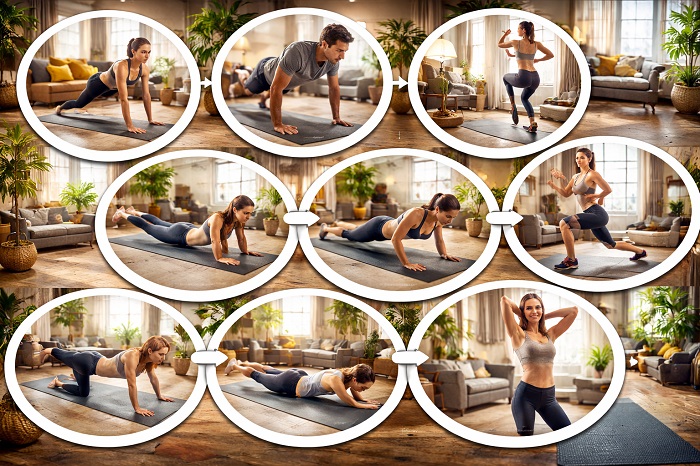

Home workouts do not have to be boring, random, or ineffective. In fact, some of the best fitness routines are built from simple bodyweight movements done consistently and with good form. You do not need dumbbells, machines, or a gym membership to improve strength, endurance, mobility, and overall fitness. What you do need is a routine that has structure, suits your current level, and is easy enough to repeat regularly.
That is where zero equipment workouts become powerful. They remove excuses, save time, and make fitness more accessible. You can do them in a bedroom, living room, balcony, or even during a busy workday. Whether your goal is fat loss, stamina, better mobility, stronger legs, or a fitter core, bodyweight training can work extremely well when your exercises are chosen properly. The key is not doing a hundred random reps. The key is combining movements in a way that challenges your full body and keeps you progressing.
Here are the top 10 home workout routines with zero equipment, each designed for a different need and easy to do at home.
1. Beginner Full Body Routine
If you are just starting out, the best routine is one that works the whole body without feeling overwhelming. A beginner full body workout helps you build movement confidence, improve stamina, and wake up muscles that may not have been used much if you have been sedentary.
A simple structure can include squats, wall or knee push ups, glute bridges, marching in place, bird dogs, and a short plank hold. Do each movement for 30 to 40 seconds, rest briefly, and repeat the full circuit three times. This kind of routine is effective because it trains your legs, chest, shoulders, core, and basic coordination all in one session. It also helps you learn exercise form without jumping straight into intense workouts that may feel discouraging.
2. Fat Burn Cardio Routine
A zero equipment cardio workout is one of the easiest ways to raise your heart rate at home. It works especially well for people who want to improve fitness, burn calories, and sweat without needing a treadmill or cycle.
This routine can include jumping jacks, high knees, mountain climbers, squat pulses, fast feet, and alternating reverse lunges. Work for 40 seconds and rest for 20 seconds between each exercise. Repeat for four rounds. What makes this routine powerful is pace. Because the exercises flow quickly, your body works hard, your breathing rises, and you get both cardio and lower body work in one session. If you live in an apartment and want lower impact, you can replace jumps with step based versions and still make the workout effective.
3. Lower Body Strength Routine
Your legs and glutes can be trained very effectively without weights. In fact, many people discover that bodyweight lower body sessions can become intense very quickly when done with control and enough repetitions.
A strong lower body routine can include bodyweight squats, reverse lunges, glute bridges, sumo squats, wall sits, and calf raises. You can perform each movement for 12 to 20 reps or hold where relevant, then repeat the circuit three to four times. This routine helps strengthen the thighs, glutes, calves, and hips while also improving balance and movement control. It is especially useful for people who sit for long hours and need more lower body activation.
4. Core and Abs Routine
Many people think a core workout means endless crunches, but a good bodyweight core session should train stability, control, and multiple parts of the midsection. A stronger core helps with posture, balance, exercise performance, and even lower back comfort.
A practical routine can include dead bugs, plank holds, bicycle crunches, leg raises, mountain climbers, and side planks. Perform each move for time or reps, depending on your level, and repeat for three rounds. This kind of routine works because it mixes static control with moving core exercises. Instead of only chasing the feeling of “ab burn,” it builds a stronger, more functional midsection.
5. No Jump Apartment Friendly Routine
Not everyone can do noisy workouts at home. If you have neighbors below, limited space, or joint sensitivity, a no jump routine is one of the best solutions. It can still be challenging without any impact heavy movements.
This workout can include bodyweight squats, alternating step backs, slow mountain climbers, standing knee drives, glute bridges, shoulder taps, and seated core twists. Perform each for 40 to 50 seconds with short rest periods. The beauty of this routine is that it keeps tension high while noise stays low. You still get cardio, muscular work, and sweat, but without disturbing others or overloading your knees and ankles.
6. Morning Mobility and Activation Routine
Not every home workout needs to leave you exhausted. Some of the most useful routines are the ones that wake up your body, reduce stiffness, and improve how you move through the day. A morning mobility session is especially good for people with desk jobs, low energy in the morning, or tight hips and shoulders.
This routine can include arm circles, cat cow, hip openers, bodyweight good mornings, world’s greatest stretch, shoulder rolls, and controlled squats. You can move slowly for 10 to 15 minutes without focusing on speed at all. What makes this routine valuable is that it improves mobility and body awareness while preparing you for either a workout or a better workday. It is one of the easiest routines to stick to because it does not feel punishing.
7. Upper Body Bodyweight Routine
People often assume you need weights for upper body training, but bodyweight movements can still help improve upper body strength, especially for beginners and intermediate home exercisers. The trick is to use pushing movements, holds, and high tension control.
A no equipment upper body routine can include push ups or incline push ups using a wall, shoulder taps, plank up downs, tricep dips using a stable surface if available, arm pulses, and superman holds for the upper back. This session can be structured in circuits or sets depending on your preference. While legs are easier to challenge with bodyweight alone, upper body routines still work well when you slow the tempo and focus on form.
8. Full Body HIIT Routine
If you want maximum intensity in a shorter time, a bodyweight HIIT routine is a strong choice. HIIT, or high intensity interval training, combines short bursts of hard work with planned rest, which makes the workout feel efficient and powerful.
A zero equipment HIIT routine can include burpees or modified burpees, jump squats or squat reaches, push ups, mountain climbers, skater steps, and plank jacks or step outs. Work hard for 30 seconds, rest for 15 seconds, and repeat the circuit three to five times depending on your level. This routine is ideal when you want to challenge both cardio and muscular endurance in less time. Because it is intense, it is best not to do it every single day.
9. Posture and Back Friendly Routine
A lot of people need exercise not because they want intense transformation, but because their body feels stiff, weak, or tired from sitting all day. A posture focused routine can help strengthen the back side of the body and reduce the effects of long hours at a desk.
This workout can include superman lifts, glute bridges, bird dogs, wall angels, reverse snow angels on the floor, and plank variations. These exercises target the upper back, lower back, glutes, and core, which all support better posture. It is a great routine for students, office workers, and anyone who feels rounded forward or tight after long sitting hours.
10. Weekly Zero Equipment Routine Plan
Sometimes the real problem is not lack of exercises but lack of structure. A weekly bodyweight plan makes it easier to stay consistent because you know exactly what to do each day instead of making random choices.
A simple weekly plan could look like this. On Monday, do a full body beginner or strength routine. On Tuesday, do cardio or HIIT. Wednesday can be mobility and core. Thursday can be lower body. Friday can be upper body and posture work. Saturday can be a longer full body circuit or fat burn session. Sunday can be light stretching, walking, or complete rest. This kind of structure keeps your training balanced and helps avoid overworking the same muscles every day.
How to Make Zero Equipment Workouts Effective
The reason some people think home workouts do not work is because they do not progress them. Doing the same five easy movements forever will stop challenging your body. To keep improving, you need progression. That can mean more repetitions, longer work periods, slower tempo, shorter rest, better range of motion, or more rounds.
Form also matters. A controlled squat, a clean push up variation, or a well held plank is far more effective than rushing through bad reps. Another important factor is consistency. A 20 minute bodyweight workout done four or five times a week is usually much more useful than one hard session followed by five inactive days. If your workouts are practical, repeatable, and matched to your level, zero equipment training can produce excellent results.
Conclusion
You do not need a home gym to get fitter. With the right bodyweight routines, you can improve strength, endurance, mobility, posture, and energy levels using nothing but your own body and a bit of floor space. The best zero equipment workout is not the hardest one on social media. It is the one you can do consistently, safely, and with enough effort to keep progressing.
From beginner full body circuits and lower body strength days to quiet apartment workouts and core sessions, these ten routines prove that training at home can still be powerful. Whether you are just starting or trying to rebuild consistency, zero equipment workouts offer one of the simplest and most effective ways to move better and feel stronger.