



Boost Your Content Instantly: 10 Hooks That Stop the Scroll
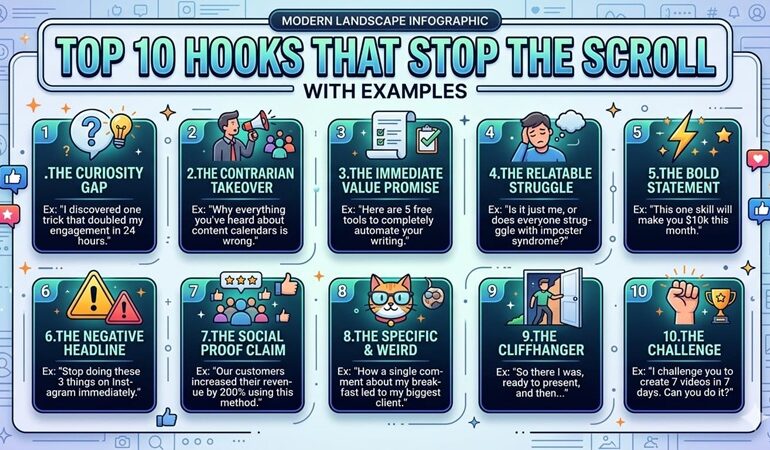

In a world where attention spans are shrinking and content is endless, the first few seconds decide everything. Whether you are creating content for social media, blogs, YouTube, or ads, your success depends on one thing, your hook. If your opening fails to grab attention, even the most valuable content will be ignored.
A powerful hook is what makes someone pause, read, watch, and engage. It creates curiosity, emotion, or urgency in a way that feels impossible to ignore. This guide on top 10 hooks that stop the scroll with examples will give you proven strategies used by top creators and marketers to instantly capture attention and boost engagement.
What Makes a Hook Effective
Before jumping into the techniques, it is important to understand why hooks work. A great hook triggers curiosity, creates a gap in knowledge, or promises value. It speaks directly to the audience’s pain point or desire and makes them feel that they need to know more.
Strong hooks are clear, specific, and emotionally engaging. They do not try to explain everything, instead they create just enough intrigue to pull the audience in.
1. The Curiosity Gap Hook
This hook works by revealing just enough information to spark curiosity but not enough to satisfy it.
For example, “I tried this simple habit for 7 days and the results shocked me.” This makes the reader wonder what the habit is and what happened next. The brain naturally wants to close this gap, which leads to higher engagement.
2. The Problem Solution Hook
This approach directly addresses a pain point and offers a solution.
For example, “Struggling to stay focused while studying, this one technique can change everything.” This type of hook works because it connects instantly with a problem the audience already has.
3. The Bold Statement Hook
A bold or surprising statement can immediately grab attention.
For example, “Most people are studying the wrong way.” This challenges the reader’s beliefs and makes them curious to find out why.
4. The Number Based Hook
Numbers make content feel structured, specific, and easy to consume.
For example, “10 proven ways to improve your productivity today.” This tells the audience exactly what to expect and makes the content feel actionable and valuable.
5. The Story Hook
Humans are naturally drawn to stories. Starting with a relatable or intriguing story can instantly capture attention.
For example, “Last year, I failed my exams despite studying every day.” This creates an emotional connection and encourages the reader to continue.
6. The Question Hook
Asking a question engages the reader directly and makes them think.
For example, “Why do some people learn faster than others?” This type of hook works well because it invites the audience into the conversation.
7. The Shocking Fact Hook
Presenting a surprising statistic or fact can immediately stop the scroll.
For example, “You forget nearly 50 percent of what you learn within an hour.” This creates urgency and highlights the importance of the topic.
8. The How To Hook
This is one of the most effective hooks because it promises value and a clear outcome.
For example, “How to study effectively in just 2 hours a day.” It tells the audience exactly what they will gain, making it highly clickable.
9. The Mistake Hook
Highlighting common mistakes makes readers curious and self-aware.
For example, “5 mistakes that are ruining your productivity.” People want to know if they are doing something wrong and how to fix it.
10. The Contrarian Hook
This hook goes against common beliefs or trends.
For example, “Working harder is not the key to success.” This challenges traditional thinking and encourages curiosity.
How to Choose the Right Hook
Not every hook works for every type of content. The key is to match your hook with your audience and platform. For example, short form content like reels and shorts require quick, impactful hooks, while blog posts can use slightly longer, story driven openings.
Think about what your audience cares about most. Are they looking for solutions, inspiration, or entertainment. Once you understand this, choosing the right hook becomes much easier.
How to Improve Your Hooks Over Time
Writing great hooks is a skill that improves with practice. Test different styles and see what works best for your audience. Pay attention to engagement metrics like click through rates and watch time.
You can also rewrite the same content with different hooks to see which performs better. Over time, you will start to notice patterns and understand what captures attention in your niche.
Conclusion
In today’s content saturated world, your hook is everything. It determines whether your audience scrolls past or stops to engage. By using these top 10 hooks that stop the scroll with examples, you can dramatically improve your content performance and reach.
The key is to stay clear, relevant, and audience focused. Start experimenting with these hooks in your next post and observe the difference. Small changes in your opening can lead to massive results in engagement and growth.