






The World’s Most Expensive Mangoes That Sell for More Than Gold (Luxury Fruit Guide 2026)
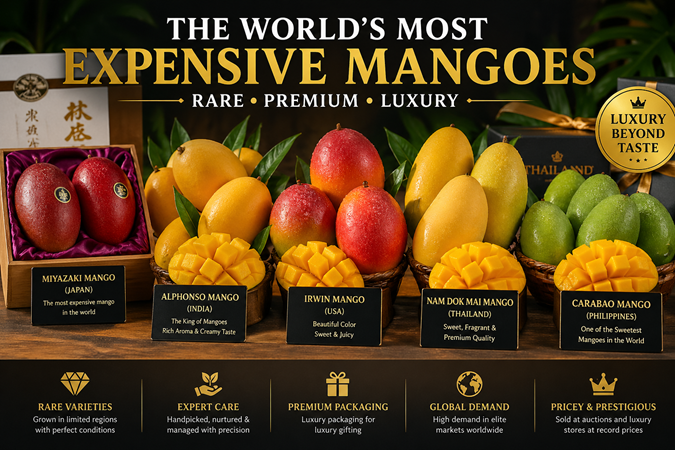

Mango is one of the most widely consumed fruits in the world, but a very small group of mango varieties exists in a completely different category. These are not ordinary seasonal fruits found in local markets. Instead, they are rare agricultural products that are treated as luxury goods in international markets.
The global demand for premium mango varieties has increased significantly in recent years due to factors such as export growth, luxury gifting culture, and agricultural branding. Countries like Japan, India, Pakistan, Taiwan, and the United States have developed unique mango cultivars that stand out due to their taste, appearance, and cultivation techniques.
What makes these mangoes expensive is not just flavor. Their pricing is influenced by rarity, controlled farming practices, limited harvest volumes, export demand, and in some cases, auction-based sales systems. Some mangoes are even individually handled and graded before they reach the market.
This article provides a detailed breakdown of the most expensive mango breeds in the world, explaining their origin, price factors, cultivation methods, and global demand.
What Makes Mangoes Expensive in Global Markets

Controlled Cultivation and Agricultural Precision
One of the most important reasons behind high mango prices is controlled cultivation. In countries like Japan, mango farming is treated as a precision-based agricultural practice where each fruit is monitored individually. Temperature, sunlight exposure, and soil nutrition are carefully controlled to ensure consistent quality.
In many cases, mango trees produce only a limited number of export-grade fruits because farmers intentionally reduce yield to improve quality. This practice increases cost but ensures premium grading.
Rarity and Limited Production
Some mango varieties exist only in specific geographical regions and are grown in extremely limited quantities. These mangoes cannot be mass-produced due to environmental or genetic limitations. As a result, supply remains low while demand continues to grow globally.
Export Demand and Global Branding
Countries like India and Pakistan export mangoes to the Middle East, Europe, and North America. In these markets, mangoes are considered luxury tropical fruits, especially when they are organic or export-grade. Branding also plays a major role, with some mangoes marketed as premium heritage fruits.
Auction-Based Pricing Systems
In Japan, certain mango varieties are sold through auctions rather than fixed retail pricing. Buyers often include luxury fruit retailers, hotels, and corporate gift suppliers. This system significantly increases the final price of premium mangoes.
Miyazaki Mango: The Most Expensive Mango in the World

The Miyazaki mango from Japan is widely recognized as the most expensive mango variety in the global market. It is cultivated in Miyazaki Prefecture under highly controlled agricultural conditions that prioritize perfection over quantity.
Unlike regular mango farming, Miyazaki mango production involves meticulous care at every stage. Farmers ensure that each fruit receives optimal sunlight exposure and balanced nutrition. The mangoes are often wrapped individually while still on the tree to maintain their flawless appearance.
The fruit is known for its deep red-purple color, high sugar content, and extremely smooth texture. In Japan, these mangoes are not treated as everyday fruits but as luxury gift items. They are commonly presented during formal occasions, corporate events, and ceremonial exchanges.
The pricing of Miyazaki mangoes can reach extremely high levels in auctions, sometimes costing thousands of dollars per kilogram depending on quality grading and seasonal demand. This makes it the most expensive and prestigious mango variety in the world.
Alphonso Mango: The King of Mangoes from India

Alphonso mango, also known as Hapus, is one of the most famous mango varieties in the world and is widely regarded as the king of mangoes. It originates from the coastal regions of Maharashtra, particularly Ratnagiri and Devgad.
The uniqueness of Alphonso mango lies in its rich aroma, smooth texture, and naturally sweet flavor profile. The soil conditions in the Konkan region, combined with coastal humidity and traditional farming techniques, contribute to its distinctive quality.
Although Alphonso mangoes are more affordable compared to Japanese luxury varieties, premium export-grade Alphonso mangoes command significantly higher prices in international markets. Limited seasonal availability further increases their demand.
Alphonso mango is heavily exported to countries such as the United Arab Emirates, United Kingdom, and United States, where it is considered a premium fruit during the summer season.
Kohitur Mango: A Rare Heritage Variety

Unlike commercial mango varieties, Kohitur mango is not widely cultivated on a large scale. Its production is limited to specific regions, which makes it highly rare in modern markets.
The fruit is known for its distinct size and unique flavor profile. In many cases, Kohitur mango trees are preserved in traditional orchards that have been maintained for generations. Due to its rarity, this mango is often considered a collector’s fruit rather than a commercial product.
Noorjahan Mango: The Giant Mango of India

Noorjahan mango is one of the largest mango varieties in the world and is primarily grown in the Alirajpur region of Madhya Pradesh, India.
The most distinctive feature of Noorjahan mango is its massive size. A single fruit can weigh several kilograms, making it significantly larger than standard mango varieties. This unusual characteristic makes it highly unique in global fruit classification.
Due to limited cultivation and unpredictable yield, Noorjahan mangoes are rare in commercial markets. Farmers often grow them in small quantities, and their availability depends heavily on seasonal conditions.
Although not as internationally famous as Alphonso or Miyazaki, Noorjahan mango holds strong regional value due to its size and rarity.
Sindhri Mango: Pakistan’s Premium Export Variety

Sindhri mango is one of the most important export varieties from Pakistan and is widely known for its sweet taste and smooth texture. It is primarily cultivated in the Sindh region, where climatic conditions are ideal for mango farming.
Sindhri mango is highly valued in international markets due to its fiberless pulp, bright yellow skin, and strong aroma. It is particularly popular in Gulf countries where demand for South Asian mangoes is consistently high.
One of the key strengths of Sindhri mango is its shelf life, which makes it suitable for long-distance export without significant quality loss. This factor contributes to its premium pricing in global markets.
Irwin Mango: A Premium Hybrid Variety

Irwin mango is cultivated in regions such as Taiwan and the United States, particularly Florida. It is known for its attractive red-yellow skin and smooth texture, which makes it highly appealing in international fruit markets.
Unlike traditional Asian mango varieties, Irwin mango was developed with a focus on export quality and visual appeal. Its non-fibrous pulp and consistent shape make it suitable for premium retail markets.
This mango is often exported in carefully packed boxes and sold in high-end fruit stores, especially in East Asia.
Global Comparison of Expensive Mango Varieties

When comparing the world’s most expensive mango varieties, it becomes clear that pricing is influenced by a combination of rarity, cultivation method, and market positioning.
Japanese mangoes such as Miyazaki dominate the luxury segment due to their auction-based pricing and extreme quality control. Indian varieties like Alphonso and Noorjahan dominate in terms of taste diversity and size uniqueness. Pakistani Sindhri mango holds strong export value due to its consistency and demand in international markets.
Each variety represents a different aspect of mango cultivation, from luxury branding to heritage farming and export economics.
Conclusion: The Economics of Luxury Mangoes
The global mango industry is far more complex than it appears. While most people associate mangoes with seasonal fruits, certain varieties have transformed into luxury commodities that reflect agricultural innovation and cultural significance.
From Japan’s highly controlled Miyazaki mango to India’s heritage Noorjahan and world-famous Alphonso, each variety represents a unique intersection of farming expertise, environmental conditions, and market demand.
As global appreciation for exotic fruits continues to grow, the demand for premium mango varieties is expected to increase further. These mangoes are no longer just food products; they are symbols of luxury, craftsmanship, and agricultural excellence.