






Glow More with Less: The Ultimate Minimal Skincare Guide for 2026

- PublishedApril 24, 2026
If you’ve been paying attention to skincare trends lately, you’ve probably noticed a quiet shift. People are no longer obsessing over 10-step routines or hoarding dozens of products. Instead, they’re simplifying—and surprisingly, their skin looks better than ever.
This change didn’t happen overnight. For years, skincare was driven by the idea that more products meant faster results. Serums, toners, exfoliants, masks—layer after layer, step after step. But instead of clear, glowing skin, many people ended up with irritation, breakouts, and confusion.
In 2026, the conversation has changed. Skincare is no longer about excess. It’s about efficiency, consistency, and skin health. This is where the concept of minimal skincare routine, also known as skinimalism, comes in. It focuses on using fewer but more effective products that support your skin rather than overwhelm it.
This approach is not just a trend—it’s a smarter, more sustainable way to care for your skin.
What Is a Minimal Skincare Routine?

A minimal skincare routine is built on a simple idea: your skin doesn’t need dozens of products to stay healthy. It needs the right products, used consistently.
Instead of following complicated routines, minimal skincare focuses on a few essential steps that maintain your skin’s natural balance. These steps are designed to protect your skin barrier, provide hydration, and prevent damage.
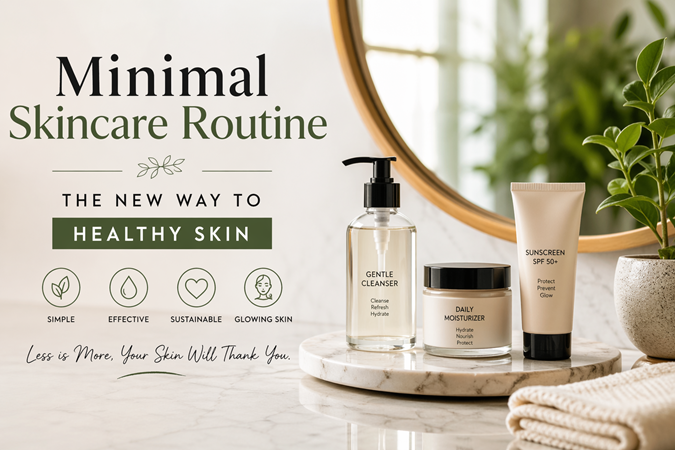
At its core, a minimal routine typically includes cleansing, moisturizing, and sun protection. Additional steps, like treatments or serums, are added only if your skin truly needs them.
The goal is not to eliminate skincare, but to remove unnecessary steps and focus on what actually works.
Why Minimal Skincare Works Better in 2026

Understanding the Skin Barrier
One of the biggest reasons minimal skincare is gaining popularity is the growing awareness of the skin barrier. This outer layer of your skin plays a crucial role in keeping moisture in and harmful elements out.
When you use too many products—especially strong active ingredients—you risk damaging this barrier. A weakened skin barrier can lead to dryness, sensitivity, acne, and uneven texture.
Minimal skincare protects this barrier by reducing exposure to harsh or unnecessary ingredients, allowing your skin to repair and function properly.
Consistency Over Complexity
Another reason minimal routines work better is consistency. Complex routines are difficult to maintain. People often skip steps, mix incompatible products, or switch products too frequently.
A simple routine, on the other hand, is easy to follow every day. And in skincare, consistency is what delivers real results. Even basic routines, when followed regularly, can significantly improve skin health over time.
Reduced Risk of Irritation
Layering multiple products increases the chances of ingredient conflicts and irritation. Minimal skincare reduces this risk by limiting the number of products applied to the skin.
This makes it especially beneficial for people with sensitive or acne-prone skin, as it allows the skin to stabilize and recover.
Better Results with Less Effort
Minimal skincare proves that you don’t need an extensive routine to achieve healthy, glowing skin. By focusing on essential care, you can save time, reduce expenses, and still see noticeable improvements.
The Ideal Minimal Skincare Routine (Step-by-Step)

Morning Routine
Your morning routine should focus on protection and hydration.
Start with a gentle cleanser that removes oil and impurities without stripping your skin. This prepares your skin for the day ahead. Follow this with a lightweight moisturizer that keeps your skin hydrated and balanced.
The most important step in the morning is sunscreen. Daily sun protection helps prevent premature aging, pigmentation, and long-term skin damage. Using a broad-spectrum sunscreen with SPF 30 or higher is essential, even if you spend most of your time indoors.
Night Routine
At night, your routine should focus on cleansing and repair.
Begin by cleansing your skin thoroughly to remove dirt, pollution, and sunscreen. This step is crucial for maintaining clear pores and preventing breakouts.
After cleansing, apply a moisturizer to support your skin’s natural repair process. During sleep, your skin regenerates itself, and proper hydration helps this process work effectively.
If needed, you can include a single treatment product at night, such as a mild retinol or a hydrating serum. However, this step is optional and should be chosen based on your skin’s needs.
Choosing the Right Ingredients for Minimal Skincare

Minimal skincare does not mean ignoring ingredients. Instead, it means choosing ingredients that provide multiple benefits.
Ingredients like niacinamide are known for improving skin texture, controlling oil, and reducing inflammation. Hyaluronic acid helps retain moisture and keeps the skin hydrated. Ceramides are essential for repairing and strengthening the skin barrier.
Vitamin C is another powerful ingredient that brightens the skin and protects it from environmental damage. When used correctly, these ingredients can replace multiple products and simplify your routine.
The key is to avoid using too many active ingredients at once. Focus on one or two that address your main skin concerns.
Minimal Skincare for Different Skin Types

Oily Skin
For oily skin, a lightweight routine works best. Use a gentle foaming cleanser to control excess oil without over-drying the skin. Follow with a gel-based moisturizer and a non-comedogenic sunscreen.
Ingredients like niacinamide can help regulate oil production and reduce the appearance of pores.
Dry Skin
Dry skin requires more hydration and nourishment. A cream-based cleanser is ideal, as it cleans without stripping natural oils. Use a rich moisturizer containing hydrating ingredients like hyaluronic acid and ceramides.
Consistency is key for maintaining hydration and preventing flakiness.
Sensitive Skin
Sensitive skin benefits the most from minimal skincare. Use fragrance-free, gentle products with minimal ingredients. Avoid experimenting with too many products at once, as this can trigger irritation.
Focus on calming and barrier-repairing ingredients.
Acne-Prone Skin
For acne-prone skin, simplicity helps reduce irritation and inflammation. Use a gentle cleanser, a lightweight moisturizer, and targeted treatment if necessary.
Avoid over-exfoliating or using multiple acne treatments at once, as this can worsen breakouts.
Common Mistakes to Avoid in Minimal Skincare

One common mistake is assuming that minimal skincare means skipping essential steps. Sunscreen, for example, should never be ignored.
Another mistake is constantly changing products. Even with a minimal routine, switching products too frequently can prevent your skin from adapting and showing results.
Using too many “multi-functional” products can also defeat the purpose of minimal skincare. The goal is simplicity, not replacing one complex routine with another.
The Role of Lifestyle in Skin Health

Skincare is not just about what you apply to your face. Your daily habits play a significant role in how your skin looks and feels.
Adequate sleep allows your skin to repair itself. Proper hydration supports skin elasticity and overall health. A balanced diet provides essential nutrients that contribute to a natural glow.
Stress management is equally important, as stress can trigger acne and other skin issues.
A minimal skincare routine works best when combined with a healthy lifestyle.
How Long Does It Take to See Results?
Minimal skincare is not about instant transformation. It focuses on long-term improvement.
In the first few weeks, you may notice reduced irritation and improved skin comfort. Over time, your skin becomes more balanced, and issues like breakouts or dryness start to decrease.
Most people begin to see visible results within four to six weeks, depending on their skin type and consistency.
Why Minimal Skincare Is the Future

Minimal skincare aligns with the modern approach to beauty—simple, effective, and sustainable. It reduces unnecessary consumption, supports skin health, and promotes mindful self-care.
As more people understand their skin better, the demand for complicated routines is decreasing. Instead, the focus is shifting toward quality over quantity.
This approach not only benefits your skin but also makes skincare more manageable and enjoyable.
Conclusion: Less Products, Better Skin
Minimal skincare is not about doing less for your skin—it’s about doing what truly matters.
By focusing on essential steps, choosing the right ingredients, and staying consistent, you can achieve healthy, balanced skin without overwhelming routines.
In 2026, skincare is no longer about chasing trends or using as many products as possible. It’s about understanding your skin and giving it exactly what it needs—nothing more, nothing less.
And sometimes, that simplicity is exactly what leads to the best results.
Skincare: The Foundation of Healthy, Confident Skin
Skincare is more than just a daily habit—it’s a long-term investment in your skin’s health, appearance, and overall confidence. In today’s fast-paced world, where pollution, stress, and lifestyle choices constantly impact our skin, maintaining a proper skincare routine has become essential rather than optional.
At its core, skincare focuses on cleansing, nourishing, and protecting the skin. A good routine helps remove impurities, maintain hydration, and strengthen the skin barrier. When done consistently, it not only improves your skin’s texture and tone but also prevents common issues like acne, dryness, premature aging, and pigmentation.
One of the most important aspects of skincare in 2026 is personalization. Gone are the days of one-size-fits-all routines. People are now more aware of their unique skin types—whether oily, dry, combination, or sensitive—and are choosing products that suit their specific needs. This shift has made skincare more effective and results-driven.
Another key trend is minimalism. Instead of layering multiple products, people are focusing on fewer, high-quality essentials that deliver real benefits. This approach not only simplifies routines but also reduces the risk of irritation caused by overuse of active ingredients.
Consistency plays a crucial role in skincare success. No product can deliver instant miracles, but a simple and consistent routine can lead to noticeable improvements over time. Healthy skin is not about perfection; it’s about balance and care.
Ultimately, skincare is also a form of self-care. Taking a few minutes every day to care for your skin can be calming and rewarding. It’s a small act that reflects how you value yourself, making skincare not just a routine, but a meaningful daily ritual.
Skincare Website: Your Digital Guide to Better Skin
A skincare website serves as a modern-day companion for anyone looking to improve their skin health. In the digital age, where information is just a click away, these platforms play a crucial role in educating, guiding, and helping users make informed decisions about their skincare journey.
A well-designed skincare website goes beyond simply selling products. It creates an experience. From detailed product descriptions to expert-backed blogs, tutorials, and personalized recommendations, it acts as a complete resource for skincare enthusiasts. Users can explore different products, understand ingredients, and learn how to build routines tailored to their needs.
One of the most valuable aspects of a skincare website is accessibility. Whether someone is a beginner or an experienced skincare user, they can easily find information suited to their level. Many websites now include features like skin quizzes, virtual consultations, and AI-based recommendations, making the experience more interactive and personalized.
Trust is another key factor. In a market filled with countless products and claims, a reliable skincare website builds credibility through transparency. This includes honest reviews, ingredient breakdowns, and dermatologist insights. When users feel informed and confident, they are more likely to make better choices.
In 2025 and 2026, skincare websites are also focusing on clean design and minimal navigation. Just like minimal skincare, users prefer simple, clutter-free interfaces that make browsing easy and enjoyable.
Ultimately, a skincare website is not just a shopping platform—it’s a guide, a teacher, and a trusted partner in your journey toward healthier skin.