






Biggest recorded losses till date due to Bitcoin password loss
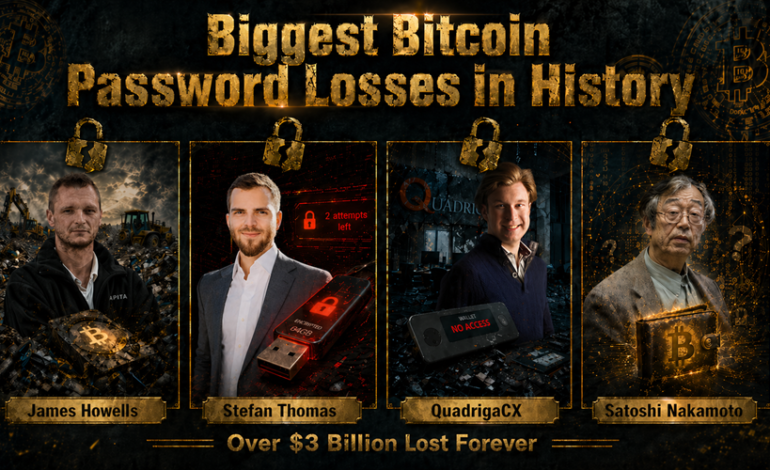

Imagine having $800 million buried under garbage, and nobody will let you dig it up.
Or sitting on $600 million, locked behind a password you simply cannot remember, with only 2 attempts left before it disappears forever.
These are not fiction. These are real people, real losses, and they happened because of a forgotten Bitcoin password.
In the world of cryptocurrency, one of the most painful phrases is losing millions of Bitcoin passwords. Unlike a bank, there is no customer service number to call. No forgot-password link. No government rescue. Once a Bitcoin wallet is locked and the password is gone, it is gone forever.
In this article, we dive deep into the most shocking true stories of people who lost millions in Bitcoin due to forgotten passwords, lost hard drives, and tragic deaths. We also explain whether recovery is possible in 2025, and most importantly, how you can make sure this never happens to you.
By the end of this article, you will understand exactly why this happens, who it has happened to, and what you must do right now to protect your own crypto assets.
How Much Bitcoin is Lost Forever?
Before we get to the individual stories, let us first understand the massive scale of this problem.
According to blockchain analytics firms, an estimated 3.7 to 4 million Bitcoins are considered permanently lost. That represents roughly 20% of the entire Bitcoin supply, which is capped at only 21 million coins total. These are coins that will never, ever enter circulation again.
These coins sit in wallets that have not moved in over a decade. Their owners have either died, forgotten their passwords, thrown away their hard drives, or lost their private keys. In many cases, the wallets hold enormous fortunes, completely untouched and completely unreachable.
At current Bitcoin prices, these lost coins represent somewhere between $200 billion and $300 billion worth of digital assets, vanished into the blockchain forever.
Interestingly, economists and analysts point out that this actually benefits remaining Bitcoin holders. Because the total circulating supply is continuously reduced by lost coins, the remaining Bitcoin becomes increasingly scarce. Scarcity, in any asset, supports long-term price growth.
Important fact to understand: Bitcoin’s blockchain is completely public. Anyone can see exactly how much is sitting in any wallet at any time. But without the private key or password, not even the most powerful supercomputer on earth can access those funds. Breaking Bitcoin’s encryption is mathematically impossible with today’s and tomorrow’s technology.
Biggest Bitcoin Password Loss Stories in History
These are not rumors or exaggerations. These are verified, documented cases of real people who lost access to life-changing fortunes, simply because they forgot a password or made one moment of carelessness.
1. James Howells — The Man Whose $800 Million is in a Landfill

- Loss: 8,000 BTC
- Estimated Value 2025: $800 Million – $1 Billion
- Year: 2013
- Location: Newport, Wales, UK
- Status: Buried in landfill. Unrecovered as of 2025.
James Howells was a British IT worker who began mining Bitcoin in 2009, back when almost nobody on the planet knew what Bitcoin even was. He accumulated 8,000 Bitcoin over time, stored the private keys on a laptop hard drive, and then largely forgot about the whole thing as Bitcoin faded from his daily attention.
Then, in 2013, came the moment that changed his life forever. While cleaning his house, Howells accidentally threw away that old hard drive. He did not realize what he had done until later, and by then, it was already too late.
The hard drive ended up in a landfill site in Newport, Wales. It is believed to be buried somewhere under years and years of compressed garbage, at a depth that makes casual searching impossible.
When Bitcoin’s price began its historic rise, Howells suddenly understood the scale of what he had discarded. He immediately contacted Newport City Council, requesting official permission to excavate the landfill site and attempt to locate his hard drive.
The council has refused, repeatedly and firmly. They cite environmental regulations, the enormous cost of such an operation, and the legal complexities of excavating a licensed landfill site. Howells has offered the council a significant share of any recovered Bitcoin, reportedly worth tens of millions of pounds, but they have continued to say no.
As of 2025, those 8,000 Bitcoins are worth somewhere between $800 million and nearly $1 billion, depending on Bitcoin’s price at any given moment. Howells has not given up. He continues his legal and public campaign to win excavation rights. He has even reportedly put together a team of experts, data recovery specialists, environmental engineers, and legal advisors — ready to begin the moment permission is granted.
So far, the permission has not come. The Bitcoin remains buried beneath tonnes of Welsh garbage.
“I’ve been living with this since 2013. Every time Bitcoin goes up, the number gets more and more insane.” — James Howells, in various media interviews.
2. Stefan Thomas — 2 Attempts Left, $600 Million Locked

- Loss: 7,002 BTC
- Estimated Value 2025: $600 Million+
- Year: 2011
- Device: IronKey encrypted USB drive
- Attempts Remaining: 2 of 10
- Status: Still locked. Bitcoin is unrecoverable as of 2025.
This is perhaps the most psychologically agonizing story in the entire history of cryptocurrency. Stefan Thomas, a German-born programmer living in San Francisco, received 7,002 Bitcoin in 2011 as payment for creating an animated YouTube video explaining how Bitcoin works. It was called “What is Bitcoin?” and it became widely shared in the early crypto community.
Thomas stored his Bitcoin private keys on an IronKey, a highly secure, encrypted USB drive manufactured specifically for maximum security. Then he lost the small piece of paper on which he had written down the password.
The IronKey has one brutal and unforgiving security feature: after 10 failed password attempts, it permanently encrypts itself using its own internal encryption. The data becomes completely and permanently unrecoverable. There is no backdoor. There is no manufacturer override. There is no master reset. After 10 wrong guesses, everything inside is gone. Forever.
Stefan Thomas has already used 8 of his 10 attempts.
He has sat at his desk and tried every password combination he could think of. He has gone through years of memory, trying to reconstruct what he might have typed in 2011. He has hired cryptography experts, cybersecurity professionals, and hardware forensics specialists. He has had sleepless nights. He has had moments of despair that he has described openly in interviews.
Nothing has worked.
His fortune, worth over $600 million at 2025 Bitcoin prices and over $700 million at peak prices, sits in a device slightly larger than a thumb. Two chances remain. Two shots at one of the most expensive passwords in human history.
“I would just lie in bed and think about it. Then I would go to the computer with some new idea, and it wouldn’t work, and I would be desperate again.” — Stefan Thomas, The New York Times.
2025 Update: As of 2025, Stefan Thomas has NOT recovered his Bitcoin. He has reportedly stepped back from actively attempting recovery, choosing instead to focus on rebuilding his life and career. He has moved forward emotionally, even if the financial loss remains staggering. The IronKey drive still exists. The Bitcoin is still locked. And two attempts remain, waiting.
3. QuadrigaCX — $2 Billion Died With a CEO

- Loss: 26,350+ BTC + other crypto
- Estimated Value 2025: $2 Billion+
- Year: 2018
- Country: Canada
- Status: Customer funds permanently lost. The exchange collapsed.
This case is different from the others, and in many ways, it is the most devastating of all. Because it was not one person’s fortune that was lost. It was the savings of thousands of ordinary people, retail investors, and everyday Canadians who trusted a cryptocurrency exchange with their money.
Gerald Cotten was the founder and CEO of QuadrigaCX, which was Canada’s largest cryptocurrency exchange at its peak. He was young, ambitious, and considered a rising star in the Canadian crypto community.
In December 2018, Cotten died suddenly while traveling in Jaipur, India. He was just 30 years old. The reported cause of death was complications related to Crohn’s disease. His death was unexpected and left the company in a state of complete chaos.
With Gerald Cotten died the only known access to QuadrigaCX’s cold wallets, the offline storage systems where the bulk of customer cryptocurrency funds were held. Nobody else in the entire company had the passwords. No backup had ever been created or shared. No succession plan existed. Not a single emergency protocol had been established.
Overnight, approximately 26,350 Bitcoin, along with significant quantities of Ethereum, Bitcoin Cash, Litecoin, and other cryptocurrencies, became completely inaccessible. At 2025 Bitcoin prices, the Bitcoin portion alone is worth well over $2 billion.
The case became even more disturbing as investigations began. Blockchain analysts and court-appointed monitors discovered that many of the so-called cold wallets were actually empty long before Cotten’s death. This raised deeply serious questions about whether QuadrigaCX was ever fully solvent, and whether customer funds had been misused. A Netflix documentary, “Dead Man’s Switch: A Crypto Mystery”, explored the full story and its many unanswered questions.
The full truth of what happened to QuadrigaCX’s customer funds has never been completely resolved.
4. Satoshi Nakamoto — 1 Million BTC Nobody Can Touch
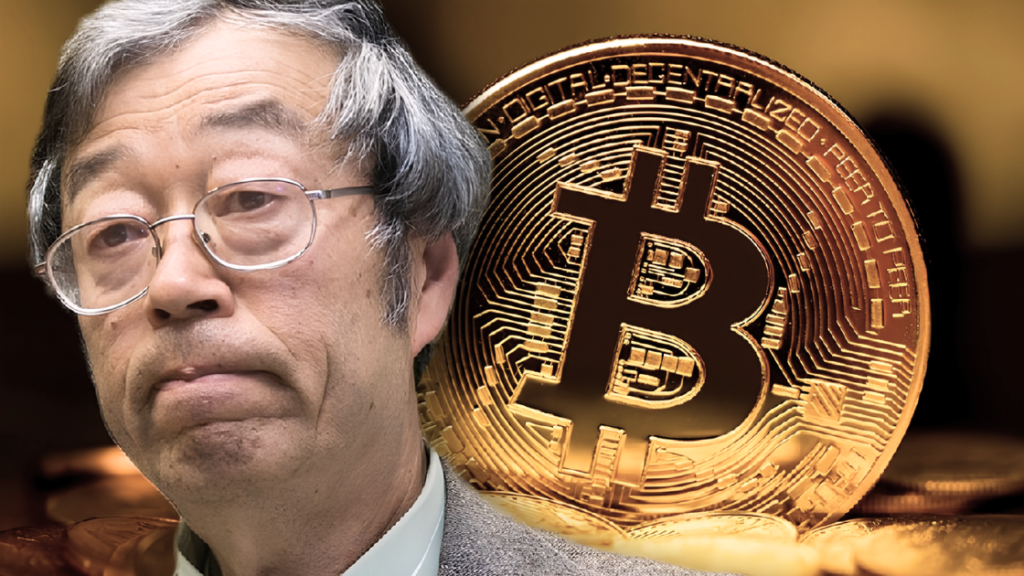
- Loss: ~1,000,000 BTC
- Estimated Value 2025: $70–100 Billion
- Status: Dormant since 2010. Identity unknown.
Satoshi Nakamoto is the anonymous creator of Bitcoin, a name that may belong to one person or a group of people. Nobody knows. In the earliest days of Bitcoin’s existence, Satoshi personally mined approximately 1 million Bitcoin. That is nearly 5% of the entire Bitcoin supply that will ever exist.
Then, in 2010, Satoshi disappeared from the internet entirely. No emails. No forum posts. No messages of any kind. Just silence.
Those 1 million Bitcoins have never moved. Not a single satoshi, the smallest unit of Bitcoin, has been transferred from those wallets in over 15 years. At current prices, that stash is worth somewhere between $70 billion and $100 billion.
Whether these coins are truly lost or simply waiting, nobody knows. Satoshi’s identity remains the greatest mystery in the history of technology. Some believe Satoshi is dead and the keys are gone with them. Others believe Satoshi is alive, watching, and will one day move those coins, an event that would send shockwaves through global financial markets.
Either way, the coins have not moved. They are considered functionally inaccessible by the market, and most analysts do not include them in Bitcoin’s active circulating supply.
Why Do People Lose Bitcoin Passwords?
You might be wondering, how can someone be so careless with what is effectively a fortune? The answer lies in timing and psychology.
When most of these people stored their Bitcoin, it was worth almost nothing. In 2009, 2010, and 2011, Bitcoin was a curiosity for computer enthusiasts. Nobody was treating a USB drive with $600 million worth of keys the same way they would treat a bank vault. Because at the time, it was not worth $600 million. It was worth almost nothing.
Here are the most common reasons people lose access to their Bitcoin:
- Written on Paper — Then Lost: Early Bitcoin users wrote passwords on sticky notes, torn notebook pages, or random scraps of paper. These were thrown away during house moves, damaged by water or fire, or simply misplaced over the years.
- Old Hardware Discarded: Like James Howells, many people stored wallet files on old hard drives or USB sticks, then threw away the hardware during routine cleanups, not realizing what was on it.
- Relying on Memory Alone: Some users trusted their own memory for passwords. Years later, especially after illnesses, aging, or simply the natural fading of memory, those passwords were gone.
- Death Without a Plan: The QuadrigaCX case is the most extreme warning. When one person holds all the keys and dies without sharing access information, the funds effectively die with them.
- Overly Complex Passwords: Some security-conscious users created extremely complex, unique passwords for their wallets, then could not reproduce them later because no written or digital backup existed.
Can You Recover a Lost Bitcoin Wallet in 2025?
This is the question that millions of people are desperately asking. The honest answer depends entirely on why the wallet is lost and how much of the password you can still recall.
- If you remember part of the password: Your chances are meaningfully good. Professional recovery services like Wallet Recovery Services (operated by a specialist known as Dave Bitcoin) use sophisticated pattern-based attacks to reconstruct passwords based on partial information you provide. They only charge a percentage of the recovered funds if they succeed.
- If you have the wallet.dat file but forgot the full password: Tools like Hashcat and John the Ripper can run targeted brute-force attacks based on known patterns in your password habits. Success depends heavily on how complex your original password was.
- If you have completely forgotten the password with zero hints: Recovery is effectively impossible with current technology. Bitcoin uses AES-256 encryption combined with multiple rounds of SHA-256 hashing. Even using every computer on earth simultaneously, brute-forcing a strong Bitcoin wallet password would take longer than the age of the universe.
- If you have a physically damaged hard drive: Professional data recovery laboratories, such as DriveSavers or Ontrack, can sometimes recover data from damaged storage media. This is expensive, often costing thousands of dollars, but it has worked for some people.
- New in 2025 — AI-Powered Recovery: Several services now use artificial intelligence to analyze your known password habits, common patterns, and personal information to generate highly targeted password lists. This approach has shown promising results for people who used simple or patterned passwords.
The bottom line is honest and clear: if you have no memory of the password whatsoever and no partial hints, recovery is not currently possible. However, if you remember even a fragment, a word, a number pattern, an approximate length, or a character you always used, professional recovery services are absolutely worth contacting before giving up.
How to Never Lose Your Bitcoin Password
The best lesson from all these stories is simple: protect your crypto access like your financial life depends on it, because at Bitcoin’s current valuations, it genuinely does.
- Store Your Seed Phrase on Paper — In Multiple Locations: Your 12 or 24-word seed phrase is your master key to any modern crypto wallet. Write it down clearly on paper and store copies in at least two secure physical locations, a home safe, a bank safe deposit box, or with a trusted family member. Never store it digitally on a phone, computer, or cloud service.
- Use a Hardware Wallet: Ledger and Trezor are the gold standards for cold storage. These devices keep your private keys completely offline, immune to hacking. Keep the recovery seed phrase backed up in multiple locations.
- Leave a Crypto Will: This is the most overlooked step. Tell a trusted person, your spouse, a parent, an adult child, or a solicitor, where your recovery information is stored and how to access it in an emergency. The QuadrigaCX disaster is the ultimate warning of what happens when no succession plan exists.
- Test Your Access Regularly: Once every six months, open your wallet and verify that you can still access it using your stored credentials. Catching a problem early, before you forget your password entirely, is infinitely easier than recovering afterward.
- Use a Reputable Password Manager: For software wallets, a trusted password manager such as Bitwarden or 1Password adds a powerful layer of encrypted backup. Your wallet password is stored securely and accessibly.
- Consider Multi-Signature Wallets: Multi-signature (multi-sig) wallets require multiple private keys to authorize any transaction. Even if one key is lost, access remains possible through the remaining keys. This setup is particularly important for large holdings.
Final Thoughts
The stories of James Howells, Stefan Thomas, Gerald Cotten, and Satoshi Nakamoto are not just cautionary technology stories. They are deeply human stories, about hope, about regret, and about the irreversible nature of decentralized finance.
Bitcoin was designed to give people complete control over their own money. No banks. No middlemen. No intermediaries who can freeze your account or reverse a transaction. It is financial freedom in its purest form. But that freedom comes with a terrifying responsibility that traditional banking never required of ordinary people.
You are your own bank. And banks do not forget their vault codes.
The lesson that costs billions of dollars is actually free: write down your seed phrase, store it in multiple safe places, tell someone you trust where it is, and test your access regularly.
Do that, and you will never become the next cautionary headline.
If you found this article valuable, share it with someone who holds crypto. It might be the most important thing you ever send them.
Frequently Asked Questions About Bitcoin Password Loss
Q1. Did Stefan Thomas get his Bitcoin back?
Answer: No. As of 2025, Stefan Thomas has not recovered his 7,002 Bitcoin. He has used 8 of his 10 IronKey password attempts with only 2 remaining. He has reportedly stepped back from actively attempting recovery. His Bitcoin remains locked.
Q2. How much Bitcoin is permanently lost forever?
Answer: Blockchain analysts estimate that between 3.7 million and 4 million Bitcoins are permanently inaccessible, roughly 20% of Bitcoin’s total supply of 21 million coins. At 2025 prices, this represents hundreds of billions of dollars.
Q3. Can lost Bitcoin ever be recovered?
Answer: It depends on the specific situation. If you remember part of your password, professional services have a reasonable success rate. If you have completely forgotten the password with no hints, recovery is not currently possible with any available technology.
Q4. What is the largest lost Bitcoin wallet?
Answer: Satoshi Nakamoto’s wallets, holding approximately 1 million Bitcoin, represent the largest collection of dormant, inaccessible Bitcoin in existence, worth an estimated $70–100 billion at 2025 prices.
Q5. How can I claim unclaimed or forgotten Bitcoin?
Answer: You can only access Bitcoin in a wallet if you own the private key or seed phrase for that specific wallet. There is no legal mechanism to claim another person’s Bitcoin, even if that person is deceased. For your own forgotten wallet, contact a professional recovery service if you have partial password memory or access to the wallet file.
Q6. Did James Howells find his hard drive?
Answer: No. As of 2025, James Howells has still not been granted permission to excavate the Newport landfill in Wales. The Newport City Council continues to refuse his requests. His 8,000 Bitcoin, worth nearly $1 billion, remain buried.