






They’ll Be Gone by 2026: Birds You May Never See Again
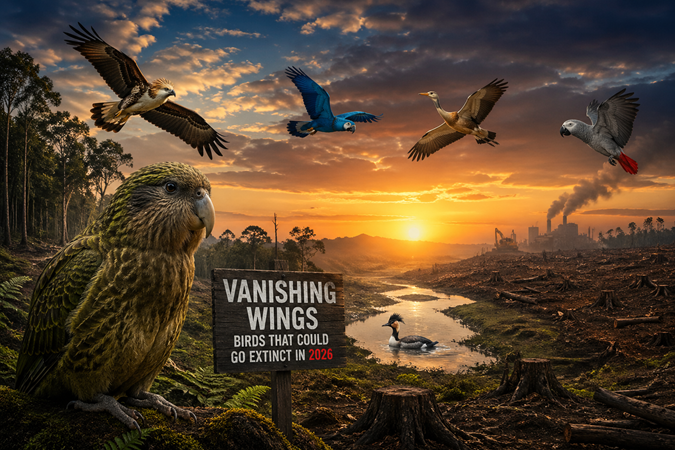

Across forests, islands, wetlands, and mountains, a silent disappearance is unfolding. It does not happen all at once. It begins slowly—fewer sightings, fewer calls, fewer records—until eventually, a species fades from scientific observation entirely. By the time the world notices, the bird is already on the edge of being forgotten.
As of 2026, conservationists estimate that over 120 bird species are now classified as “lost”, meaning they have not been documented through sightings, photographs, or audio recordings for more than a decade. This does not automatically mean extinction, but it places these birds in one of the most fragile categories in conservation science—species that may still exist, but only just.
The growing “lost birds list” is not simply a catalog of missing species. It is a reflection of deeper environmental pressures, gaps in scientific exploration, and the accelerating impact of human activity on ecosystems worldwide. At the same time, it is also a story of resilience, as recent rediscoveries have shown that even after decades of absence, some species can still return.
The Meaning of “Lost” in Modern Conservation Science

In popular conversation, the word “extinct” is often used loosely, but conservation science operates with far more precision. A bird is declared extinct only when there is no reasonable doubt that the last individual has died. This is an extremely high threshold, which is why many species exist in a prolonged state of uncertainty before any official declaration is made.
The concept of a “lost bird” fills this gap. A species is classified as lost when it has not been documented for at least ten years despite targeted efforts to find it. This includes the absence of visual sightings, audio recordings, physical specimens, or genetic evidence. The definition is deliberately strict, ensuring that species are not prematurely written off.
What makes this category significant is that it acknowledges uncertainty. A lost bird may still survive in remote or poorly surveyed habitats. Dense tropical forests, rugged mountain ranges, and isolated island ecosystems often remain underexplored, allowing small populations to persist undetected. However, the longer a species goes without documentation, the greater the probability that it has declined to critically low numbers—or disappeared entirely.
Global Bird Decline: A Crisis Beyond Rare Species

The issue of disappearing birds is not limited to rare or obscure species. It is part of a much larger global decline affecting bird populations at every level. Studies over the past decade have revealed that bird numbers are falling rapidly across continents, including regions where biodiversity monitoring is relatively strong.
This decline is driven by a combination of factors, but the most dominant is habitat loss. Forests are cleared for agriculture, wetlands are drained for development, and grasslands are converted into urban or industrial landscapes. Each of these changes removes essential breeding, feeding, and nesting areas that birds depend on.
Climate change adds another layer of complexity. Shifts in temperature and rainfall patterns disrupt migration routes, alter food availability, and create mismatches between breeding cycles and environmental conditions. Species that are already vulnerable due to limited ranges or specialized diets are particularly at risk.
Invasive species also play a significant role, especially on islands. Predators such as rats, cats, and snakes—often introduced by human activity—can devastate bird populations that evolved without natural defenses against them. For ground-nesting or flight-limited birds, even a small number of invasive predators can lead to rapid decline.
Birds That Are Critically Endangered or Possibly Lost in 2026
Below are some of the most important bird species currently considered at extreme risk of extinction or already classified as lost. Each of these represents a unique ecological story and highlights how fragile global biodiversity has become.
1. Slender-billed Curlew (Possibly Extinct)

The Slender-billed Curlew is one of the most debated bird species in modern ornithology. Once found across parts of Europe, North Africa, and western Asia, it has not been reliably recorded in decades. The last confirmed sightings date back to the late 20th century, and extensive surveys have failed to locate any surviving population.
Despite occasional unverified reports, most scientists now consider it possibly extinct. Its disappearance is linked to habitat loss in wetland regions and excessive hunting during migration periods.
The uncertainty surrounding this species makes it a symbol of how difficult it can be to confirm extinction in wild bird populations.
2. Ivory-billed Woodpecker (Critically Uncertain Status)

Often called the “Lord God Bird” due to its striking appearance, the Ivory-billed Woodpecker was once widespread in the southeastern United States. However, massive deforestation in the 19th and 20th centuries destroyed most of its habitat.
While it is officially listed as extinct by several authorities, occasional reports of sightings continue to surface, keeping scientific debate alive. If any individuals still survive, they would likely exist in extremely remote swamp forests that are difficult to access.
This species represents one of the most famous unresolved extinction debates in North American wildlife history.
3. Himalayan Quail (No Confirmed Sightings for Over a Century)

Native to the lower Himalayan regions of India, the Himalayan Quail has not been definitively observed since the 19th century. Despite multiple targeted surveys, no confirmed evidence of its survival has been found.
However, its preferred habitat—steep, dense grasslands in remote mountain areas—remains partially unexplored. This leaves a small possibility that the species may still exist in extremely isolated pockets.
Its status remains one of the most mysterious among South Asian birds.
4. Sulu Bleeding-heart (Critically Endangered)

The Sulu Bleeding-heart is a striking ground-dwelling pigeon known for the vivid red patch on its chest that resembles a “bleeding heart.” It is found only in a small region of the Philippines and has suffered severe habitat loss due to logging and land conversion.
It is now considered critically endangered, with extremely limited sightings in the wild. Continued deforestation in its range could push this species closer to extinction in the near future.
5. Cebu Flowerpecker (Once Lost, Now Rediscovered)

Unlike many species on this list, the Cebu Flowerpecker provides a rare story of hope. It was once thought to be extinct due to massive deforestation on Cebu Island in the Philippines. However, it was later rediscovered in small forest patches that had survived human activity.
This rediscovery highlights a key lesson in conservation biology: even when species appear to be lost, they may still survive in overlooked habitats.
Today, it remains endangered, but its survival has become a symbol of resilience.
6. Mindoro Bleeding-heart (Rare Island Specialist)

The Mindoro Bleeding-heart is another pigeon species native to the Philippines. It is extremely shy and ground-dwelling, making it difficult to observe even in areas where it still exists.
Habitat destruction and hunting pressure have severely reduced its population. In many regions, it is now rarely recorded, contributing to its classification among highly threatened species.
Why Island Species Dominate the Lost Birds List

One of the most striking patterns in the 2026 lost birds list is the high number of species from island ecosystems. Islands are known for their unique biodiversity, often hosting species found nowhere else on Earth. However, this uniqueness comes with extreme vulnerability.
Island birds typically evolve in isolation, adapting to stable environments with limited predators. As a result, they often lack the behavioral or physical defenses needed to survive sudden ecological changes. When humans introduce new species or alter habitats, these birds can decline rapidly.
Additionally, island habitats are inherently limited in size. A species restricted to a single island—or even a specific forest within that island—has no alternative refuge if its environment is disrupted. Deforestation, natural disasters, or climate-related changes can therefore have immediate and severe consequences.
At the same time, many islands remain under-surveyed. Difficult terrain, limited funding, and logistical challenges mean that scientific expeditions are infrequent. This creates the possibility that some “lost” birds may still exist in isolated pockets, waiting to be rediscovered.
Species on the Edge: Between Existence and Extinction

The list of birds that could disappear in the near future includes a mix of species that are critically endangered, possibly extinct, or currently classified as lost. Each represents a different stage in the same trajectory—from decline to uncertainty to disappearance.
The Slender-billed Curlew is often cited as one of the most likely recent extinctions. Once widespread across parts of Europe and Asia, it experienced a steady decline due to habitat destruction and hunting. Despite occasional unverified reports, there has been no confirmed sighting in decades, leading many experts to conclude that it is now extinct.
In contrast, the Ivory-billed Woodpecker remains one of the most debated cases in conservation. While some authorities consider it extinct, others argue that it may still survive in remote forested areas. Sporadic claims of sightings continue to fuel interest, though definitive evidence remains elusive.
The Himalayan Quail presents another layer of uncertainty. Native to the mountainous regions of India, it has not been reliably documented since the 19th century. However, its habitat is so difficult to access that the possibility of survival cannot be ruled out entirely.
Cases like the Cebu Flowerpecker demonstrate that rediscovery is possible. Once believed extinct, it was found again in a small patch of forest, highlighting how even severely reduced populations can persist under the right conditions.
Rediscoveries in 2025: Evidence That Not All Is Lost

While the growing list of lost birds underscores the scale of the crisis, recent rediscoveries provide a counter-narrative—one that emphasizes persistence and possibility. In 2025, five bird species that had not been documented for over a decade were rediscovered through targeted conservation efforts.
These rediscoveries were not random events. They were the result of careful planning, including the use of habitat modeling, local ecological knowledge, and advanced detection methods such as camera traps and acoustic monitoring. Researchers focused on regions where the probability of survival remained relatively high, often guided by historical records and environmental data.
Some of these species had gone decades without confirmed sightings, raising serious doubts about their survival. Their reappearance demonstrates that gaps in data do not always reflect true absence. In some cases, species persist in numbers too small or locations too remote to be easily detected.
However, rediscovery is only the first step. Once a species is found again, it often faces the same threats that caused its decline in the first place. Without immediate conservation action, rediscovered birds can quickly return to the brink of extinction.
The Changing Numbers: Progress or Warning Sign?

At first glance, the reduction in the number of lost bird species—from earlier estimates of over 140 to around 120 in 2026—might suggest progress. However, this change must be interpreted carefully.
Some species are removed from the list because they are rediscovered, which is a positive outcome. Others are removed because they are officially declared extinct, which represents a permanent loss. Meanwhile, new species are added each year as the time since their last confirmed sighting increases.
This dynamic creates a constantly shifting list that reflects both success and failure. It highlights the importance of continued monitoring and the need for sustained conservation efforts. Without regular surveys and updated data, species can slip through the cracks, becoming lost simply because they are not being actively searched for.
The Ecological Consequences of Bird Loss

Birds play essential roles in ecosystems, and their disappearance can have far-reaching consequences. Many species act as pollinators, helping plants reproduce and maintain genetic diversity. Others control insect populations, reducing the spread of pests and disease.
Seed dispersal is another critical function performed by birds. By consuming fruits and depositing seeds in new locations, they contribute to forest regeneration and ecosystem resilience. The loss of bird species can therefore disrupt these processes, leading to cascading effects across entire ecosystems.
In some cases, the absence of birds can alter the structure of habitats themselves. Changes in plant composition, increased insect populations, and reduced biodiversity are all potential outcomes. These shifts can ultimately affect human communities that rely on healthy ecosystems for food, water, and livelihoods.
Conservation Efforts: A Race Against Time

Efforts to locate and protect lost bird species have intensified in recent years. Conservation organizations, research institutions, and local communities are working together to identify priority areas, conduct field surveys, and implement protection measures.
Technological advances have significantly improved the ability to detect elusive species. Acoustic monitoring allows researchers to identify birds based on their calls, even in dense forests where visual sightings are difficult. Camera traps provide continuous observation without human presence, increasing the chances of capturing rare species on record.
Community involvement is also crucial. Local populations often have knowledge of their environments that is not captured in scientific literature. By incorporating this knowledge into conservation strategies, researchers can improve their chances of locating lost species and protecting critical habitats.
Despite these efforts, challenges remain. Funding limitations, political instability, and competing land-use priorities can hinder conservation initiatives. The window of opportunity for many species is narrowing, making timely action essential.
A Future Defined by Choices

The story of birds that could disappear in 2026 is not defined by a single year. It is part of an ongoing process shaped by environmental change, scientific discovery, and human decision-making. Each species on the lost birds list represents both a warning and an opportunity.
The warning is clear: without intervention, more species will move from uncertainty to extinction. The opportunity lies in the possibility of rediscovery and recovery. By investing in conservation, improving habitat protection, and expanding scientific exploration, it is still possible to change the trajectory for many of these birds.
Ultimately, the future of these species depends on how quickly and effectively action is taken. The silence left by disappearing birds is not inevitable—but preventing it requires sustained effort, global cooperation, and a commitment to preserving the natural world.