

Survive the Heatwave: Must-Have Summer Gadgets in India When There’s No Electricity (2026 Guide)
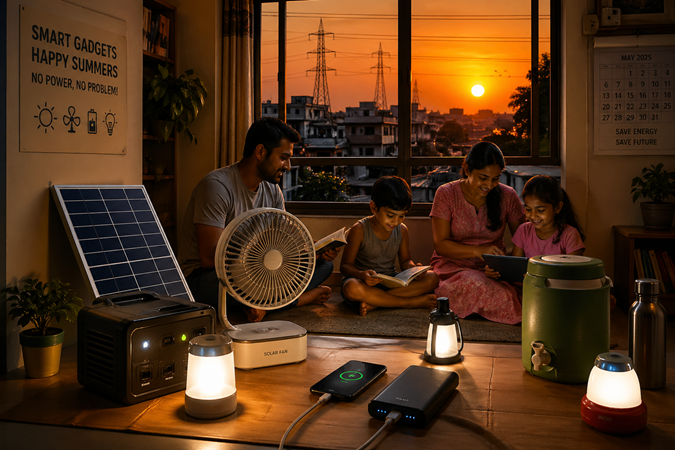

India’s rising summer temperatures are part of a broader global climate shift. Heatwaves are now arriving earlier, lasting longer, and becoming more intense. In several regions, nighttime temperatures are also rising, reducing natural cooling cycles and increasing heat stress on households.
Another important factor is electricity demand. During peak summer months, grid systems operate under extreme pressure due to simultaneous use of fans, coolers, and air conditioners. This leads to scheduled or unexpected power cuts in many areas.
As a result, the modern Indian home must be designed for two realities:
- Extreme heat conditions
- Unstable electricity supply during peak demand
The Core Devices Every Indian Home Should Have in 2026
A complete summer survival setup is not about buying random appliances. It is about building a layered system that works during both electricity availability and power outages. Below are the most essential devices every Indian household should consider in 2026.
1. Energy-Efficient BLDC Ceiling Fans

BLDC (Brushless Direct Current) fans have become one of the most important upgrades for Indian homes. They consume significantly less electricity compared to traditional induction fans while delivering strong and consistent airflow.
These fans are especially useful during voltage fluctuations, which are common in many parts of India during summer afternoons. They also work efficiently on inverter backup systems, making them ideal for homes that experience frequent power cuts.
The long-term benefit of BLDC fans is not just cooling performance but also reduced electricity bills during extended summer months.
2. Rechargeable Mini Fan for Personal Cooling During Power Cuts

One of the most practical cooling devices in 2026 is the rechargeable mini fan. Unlike ceiling fans or wall fans that depend entirely on electricity, these compact devices are designed for personal cooling and can operate independently for several hours on a built-in battery.
In Indian conditions where power cuts often occur during peak afternoon or nighttime heat, these fans become extremely useful. They are lightweight, portable, and can be placed near beds, study tables, or even carried during travel. Many modern versions now support USB Type-C charging, allowing them to be charged through power banks or laptops, making them even more reliable during long outages.
What makes them essential is not just their affordability but their ability to provide direct airflow when larger cooling systems fail. In real-life usage, they often become the difference between discomfort and manageable sleep during heatwaves.
3. USB Table Fan for Low-Cost Everyday Cooling

Another highly effective device under ₹2000 is the USB-powered table fan. While it may look simple, its usefulness in Indian summers is significant, especially for students, remote workers, and individuals living in compact rooms.
These fans run through USB ports, which means they can be powered using laptops, mobile chargers, or power banks. This makes them extremely valuable during power cuts when traditional fans stop working.
Unlike larger fans that attempt to cool an entire room, USB fans focus on direct personal airflow. This targeted cooling approach is often enough to reduce heat stress when used at close range. Their low energy consumption also makes them suitable for continuous use without worrying about electricity bills or inverter load.
4. LED Emergency Light for Safe Night-Time Heat Management

During summer power cuts, darkness combined with heat can create an uncomfortable and sometimes unsafe environment inside homes. This is where LED emergency lights become an essential part of the survival setup.
These lights provide several hours of uninterrupted illumination during outages and help maintain visibility in closed, hot rooms where airflow is limited. Modern LED lights are energy efficient, rechargeable, and designed to last through multiple cycles without performance loss.
While they do not directly cool the air, they play a critical role in managing nighttime heatwave situations by allowing safe movement, better ventilation management, and continued basic activities without dependency on candles or unstable lighting sources.
5. Handheld Mist Spray Bottle for Instant Cooling Relief

One of the simplest yet most effective low-cost cooling tools is a handheld mist spray bottle. In extreme heat conditions, especially during travel or power cuts, the human body struggles to regulate temperature due to sweat evaporation limitations.
A mist spray bottle helps address this problem by releasing fine water particles that cool the skin instantly as they evaporate. This creates a rapid drop in surface temperature and provides immediate relief from heat stress.
In Indian summers where humidity levels can make conditions feel even hotter than actual temperatures, this simple device becomes surprisingly effective. It requires no electricity, no maintenance, and can be used anywhere, making it one of the most practical survival tools in this price range.
6. Cooling Gel Pillow and Sleep Comfort Solutions

Nighttime is often the most difficult part of Indian summers because heat does not fully disappear after sunset. This leads to disturbed sleep, fatigue, and discomfort, especially in regions where nighttime temperatures remain high.
Cooling gel pillows and mats help address this issue by regulating surface temperature and absorbing excess body heat. They are designed to maintain a cooler sleeping surface without requiring electricity, making them ideal for long summer nights.
These products are especially useful in households that do not rely on air conditioning throughout the night or experience frequent power cuts. By improving sleep quality, they indirectly help maintain energy levels during the day, making them an important part of a complete summer survival setup.
7. Thermal Curtains for Blocking Heat at the Source

One of the most overlooked yet highly effective cooling solutions under ₹2000 is thermal curtains. Most indoor heat in Indian homes comes from direct sunlight entering through windows during peak afternoon hours.
Thermal curtains help reduce this heat entry by blocking sunlight and reducing radiation-based heating inside rooms. As a result, indoor temperatures remain more stable, and cooling devices like fans and coolers become more effective.
This makes them one of the most efficient passive cooling upgrades available at a low cost. Instead of trying to cool already heated air, thermal curtains prevent excessive heat from entering in the first place, which significantly reduces overall cooling demand.
8. USB Desk Fan for Continuous Personal Cooling

In modern Indian households, where work-from-home and online learning have become common, uninterrupted personal cooling is essential. A USB desk fan solves this problem efficiently by providing continuous airflow through power banks, laptops, or adapters.
Its biggest advantage is flexibility. Even during complete power failures, it can continue working as long as a backup power source is available. This makes it ideal for study tables, office desks, and compact living spaces where ceiling fans may not always be effective.
Although small in size, its impact on comfort during heatwaves is significant, especially when combined with other low-cost cooling devices.
Smart Cooling Strategies for Indian Homes
Beyond devices, cooling efficiency depends heavily on how homes are designed and used. Simple structural and behavioral adjustments can significantly reduce indoor heat.
Thermal curtains are one of the most effective and affordable solutions. They reduce direct sunlight entry and help maintain lower indoor temperatures during peak afternoon heat.
Smart plugs and basic automation systems are also becoming increasingly useful in urban homes. They allow users to control cooling devices more efficiently and reduce unnecessary energy consumption.
Passive cooling techniques such as cross ventilation, reflective roofing, and proper airflow management can reduce indoor temperature without any electricity usage. These methods are especially important during prolonged power cuts.
Budget-Based Summer Survival Setup
Different households require different levels of investment based on their needs and location.
A basic setup includes energy-efficient fans, a power bank, and thermal curtains. This is suitable for individuals living in small spaces or rented accommodations.
A mid-range setup includes air coolers, UPS systems, and smart plugs, providing a balanced cooling and backup solution for families in tier-2 cities.
A premium setup includes inverter ACs, solar backup systems, and integrated home automation, offering complete climate control even during extreme conditions.
Climate Reality: Heatwaves and Environmental Impact
While humans adapt to rising temperatures through technology and infrastructure, wildlife is facing far greater challenges.
Extreme heat is disrupting natural ecosystems across the world. Many animal species are struggling to survive due to habitat loss, rising temperatures, and changing food availability patterns.
Bird populations are particularly vulnerable during heatwaves as they experience dehydration and loss of breeding stability. Similarly, many reptiles, insects, and small mammals are affected by temperature shifts that disrupt their natural cycles.
Scientific research indicates that if global temperatures continue to rise at current rates, a significant number of species could face habitat loss or extinction due to climate stress. This highlights that heatwaves are not just a human issue but a broader ecological crisis affecting biodiversity at a global scale.
Top Trending Gadgets This Year (India 2026)
The gadget market in India for 2026 is heavily shaped by one dominant factor — extreme heat combined with unpredictable electricity supply. This has completely changed what “trending” means. Earlier, cooling gadgets were considered seasonal comfort products, but now they are essential survival tools designed for both urban apartments and semi-urban homes facing frequent power cuts.
One of the strongest trends this year is the rise of energy-efficient BLDC fans. These fans are replacing traditional ceiling fans across Indian households because they consume significantly less electricity while delivering better airflow. Their ability to run efficiently on inverter backup systems makes them extremely valuable in areas where power cuts last for several hours.
Another major category gaining attention is portable cooling devices. These include USB-powered mini fans, handheld cooling devices, and wearable neck fans that allow users to stay cool even while traveling or during electricity outages. According to recent usage trends, these devices are no longer considered luxury items but daily-use essentials for commuters, students, and office workers who face long exposure to outdoor heat.
Air coolers also continue to trend strongly, especially in North and Central India where dry heat dominates. Unlike air conditioners, modern air coolers are more energy-efficient and compatible with inverter systems, making them practical for households dealing with load shedding. In fact, updated 2026 models now focus heavily on honeycomb cooling technology and improved airflow design, making them more effective than earlier generations.
Smart air conditioners are also evolving rapidly. New inverter AC systems now come with AI-based temperature control and energy optimization features that automatically adjust cooling based on room conditions. However, their popularity is still limited to urban homes due to higher installation and electricity costs.
Overall, the biggest trend in 2026 is not just individual gadgets but hybrid cooling systems — a combination of fans, coolers, smart ACs, and backup power solutions working together to ensure uninterrupted comfort during extreme summer conditions.
Summer Shopping Essentials (India 2026)
Summer shopping in India has shifted from simple comfort-based purchases to necessity-driven planning. In 2026, households are no longer just buying cooling devices — they are building complete heat survival setups that can function even during power cuts and extreme temperature spikes.
One of the most important essentials is an energy-efficient ceiling fan, preferably BLDC-based. These fans are now considered the foundation of every Indian home because they provide continuous airflow at very low electricity consumption. Their compatibility with inverter systems makes them especially important in regions where power cuts are frequent.
Air coolers are another essential category, particularly for households in dry and semi-dry climates. Modern coolers are no longer basic appliances; they now include features like improved water tank capacity, enhanced air throw distance, and honeycomb cooling pads. These improvements make them highly effective alternatives to air conditioners in many Indian homes, especially where electricity costs are a concern.
A high-capacity power bank has also become a critical summer essential. With increasing dependence on smartphones, internet connectivity, and digital payments, staying connected during power outages is crucial. Modern power banks now support not just phones but also small fans, LED lighting systems, and emergency devices, making them an integral part of household preparedness.
Another key essential is a home UPS system. Unlike power banks, UPS systems are designed to support household-level devices such as ceiling fans, routers, and lights during outages. In many tier-2 and tier-3 cities, this has become one of the most practical investments for ensuring uninterrupted daily life during summer blackouts.
Finally, passive cooling essentials like thermal curtains, heat-reflective window covers, and ventilation optimization tools are becoming increasingly important. These items reduce indoor heat buildup without consuming electricity, making them highly effective during long outages.
In simple terms, summer shopping in 2026 is no longer about buying products individually. It is about building a complete cooling ecosystem that combines electricity-based devices, backup systems, and passive cooling methods to survive extreme Indian summers efficiently and sustainably.