




Visa-Free Travel for Indians in 2026: 50+ Countries You Can Visit Without a Visa
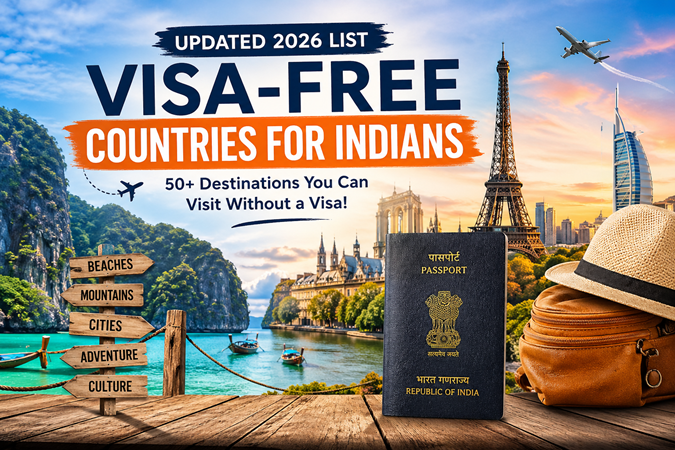

International travel for Indian passport holders has entered a new phase in 2026. What was once considered complicated and paperwork-heavy is gradually becoming more accessible, with a growing number of countries opening their doors without requiring a traditional visa process. According to the latest global mobility data, Indian citizens can now travel to around 55–56 destinations without applying for a visa in advance, placing India roughly in the mid-70s range on the global passport ranking scale.
At first glance, this sounds like a major leap forward. However, the reality behind “visa-free travel” is more layered than it appears. Not every country on this list offers completely unrestricted entry, and understanding the difference between visa-free, visa-on-arrival, and electronic travel authorisations is essential if you want your journey to be smooth from departure to arrival.
This article is designed to go beyond a basic list. It explains where Indians can travel easily in 2026, what each category actually means in real-world terms, how much it may cost you, and what practical precautions you should take before boarding your flight.
India’s Passport Ranking in 2026 and What It Really Indicates

India’s passport ranking has shown a gradual but steady improvement over the past few years. In 2026, it stands around the 75th position globally, reflecting broader diplomatic reach and evolving travel agreements. While this ranking still trails behind countries with the highest mobility, it represents a meaningful improvement compared to earlier years when access was significantly more limited.
What makes this development important is not just the number itself, but the type of access it represents. The figure of 55–56 countries includes a mix of entry systems, some of which are genuinely effortless, while others involve minor procedures at arrival or prior online approvals. This distinction is often overlooked, but it directly impacts how easy or stressful your travel experience will be.
Understanding Visa-Free Travel: The Most Misinterpreted Concept

The phrase “visa-free” is frequently used as a blanket term, but in practice, it has a very specific meaning. True visa-free travel means that you do not need to apply for any visa before departure or upon arrival. You simply carry your passport and essential travel documents and are allowed entry after basic immigration checks.
Even in these cases, however, travelers are expected to meet certain conditions. Immigration officers may ask for proof of onward travel, accommodation bookings, or sufficient funds. These requirements are standard and should not be ignored, as failing to provide them can lead to complications at the airport.
Alongside visa-free access, many countries offer visa-on-arrival facilities. This system allows you to obtain a visa at the airport after submitting forms and paying a fee. While it eliminates the need for embassy visits, it still involves a formal process and should not be confused with complete visa exemption.
A third category that has gained popularity in recent years is the e-visa or electronic travel authorisation. In this system, travelers apply online before departure and receive approval digitally. It adds a layer of planning but significantly reduces uncertainty at immigration.
Visa-Free Countries for Indians in 2026: Where You Can Travel Easily

Indian travelers have access to a diverse range of destinations that allow visa-free entry, spanning multiple continents. In South Asia, Nepal and Bhutan remain the most accessible international destinations, offering almost seamless travel with minimal formalities. These countries are particularly attractive for first-time international travelers due to their proximity, affordability, and cultural familiarity.
In Southeast Asia, Malaysia continues to be a popular visa-free destination, while Thailand has intermittently introduced visa-free entry for Indian tourists during specific promotional periods. These destinations combine ease of access with vibrant tourism ecosystems, making them ideal for short vacations.
Island nations also feature prominently in the visa-free category. Mauritius, Fiji, and Micronesia are among the most notable, offering not just simplified entry but also high-quality travel experiences ranging from luxury resorts to adventure tourism. Similarly, Caribbean countries such as Barbados and Dominica allow Indian passport holders to enter without prior visas, although reaching these destinations typically involves higher travel costs and longer flight durations.
African destinations like Senegal and Gambia have also become part of the visa-free landscape, reflecting expanding travel opportunities beyond traditional tourist circuits. While these countries may not yet be mainstream choices, they offer unique cultural and natural experiences for travelers willing to explore beyond conventional routes.
Visa-on-Arrival Countries: Convenient but Not Completely Effortless

A significant portion of the countries accessible to Indians in 2026 fall under the visa-on-arrival category. This includes popular destinations such as the Maldives, Indonesia, Sri Lanka, and Cambodia. The process is generally straightforward, but it requires travelers to complete formalities at the airport, including filling out application forms, presenting documents, and paying visa fees.
While visa-on-arrival is often marketed as hassle-free, it still demands preparation. Travelers should carry printed copies of hotel reservations, return tickets, and proof of sufficient funds. In most cases, the process is smooth, but delays can occur during peak travel seasons or if documentation is incomplete.
Despite these minor challenges, visa-on-arrival remains one of the most practical options for Indian travelers, striking a balance between accessibility and flexibility.
e-Visa Destinations: Planning Ahead for a Smoother Experience

Countries offering e-visa facilities provide a different kind of convenience. Instead of completing formalities at the airport, travelers apply online before their trip and receive approval via email. This system is increasingly popular and is used by countries such as Vietnam, Turkey, and Kenya.
The main advantage of e-visas is predictability. With prior approval in hand, travelers can avoid uncertainty at immigration checkpoints. Processing times are usually quick, often ranging from one to three days, making it a reliable option for both planned and last-minute trips.
However, it is important to ensure that all information submitted during the application process is accurate, as discrepancies can lead to delays or rejection.
Travel Costs and Budget Expectations for Indian Travelers

The cost of traveling to visa-free or visa-on-arrival destinations varies widely depending on location, season, and travel style. Southeast Asian countries like Thailand and Indonesia are among the most affordable international destinations, with return flights typically ranging between ₹18,000 and ₹35,000 if booked in advance.
Island destinations such as the Maldives and Mauritius tend to be more expensive, with flight costs starting from around ₹25,000 and going significantly higher during peak seasons. Accommodation costs in these regions can also vary dramatically, from budget guesthouses to high-end resorts.
Long-haul destinations in the Caribbean or Pacific islands are generally the most expensive, both in terms of flights and overall travel expenses. However, they offer unique experiences that are difficult to replicate elsewhere, making them appealing for special occasions or once-in-a-lifetime trips.
Important Entry Requirements You Should Never Ignore

Regardless of whether a country is visa-free or offers simplified entry, certain requirements remain universal. Most countries require passports to be valid for at least six months from the date of arrival. Travelers are also expected to show proof of onward or return travel, as well as confirmed accommodation.
In addition, immigration authorities may ask for evidence of sufficient financial means to support your stay. This can include bank statements, cash, or credit cards. While these checks are not always enforced strictly, it is always safer to be prepared.
Ignoring these basic requirements is one of the most common mistakes made by travelers and can lead to unnecessary complications.
What Has Changed in 2026 and Why It Matters

Travel regulations are constantly evolving, and 2026 has brought a mix of opportunities and adjustments for Indian passport holders. While the overall number of accessible destinations has remained stable, some countries have revised their entry policies, either tightening or relaxing requirements based on diplomatic and economic factors.
At the same time, certain countries have introduced temporary visa-free access to boost tourism, especially in the post-pandemic recovery phase. These short-term policy changes can create valuable travel opportunities, but they also require travelers to stay updated, as rules can change quickly.
Choosing the Right Destination Based on Your Travel Goals

The best destination for you depends on your priorities. For budget-conscious travelers or those planning their first international trip, nearby countries such as Nepal, Bhutan, and Thailand offer the easiest and most affordable options.
For travelers seeking luxury experiences, destinations like the Maldives and Mauritius provide world-class hospitality combined with relatively simple entry procedures. These locations are particularly popular for honeymoons and special occasions.
Those looking for unique and less crowded experiences can explore destinations in Africa or the Pacific region, where tourism is still developing and experiences feel more authentic and less commercialised.
Visa-Free Countries for Indian Passport Holders in 2026
Indian passport holders in 2026 enjoy access to a growing list of international destinations where they can travel without a pre-approved visa. These countries either allow completely visa-free entry, visa on arrival, or simplified entry permits, making international travel easier, faster, and more budget-friendly for Indian tourists.
As per the latest global travel updates and passport index reports, Indians can currently access around 50–55 destinations without a traditional visa in advance. This includes a mix of scenic island nations, cultural hubs, and adventure-friendly countries across Asia, Africa, the Caribbean, and Oceania.
Some of the most popular visa-free countries for Indians include Nepal and Bhutan, where Indian citizens can travel freely without even needing a passport in some cases. In Southeast Asia, Thailand, Maldives, Indonesia, Malaysia, and the Philippines are among the top tourist-friendly destinations offering visa-free or visa-on-arrival entry depending on stay duration and travel conditions.
In Africa, countries like Mauritius, Rwanda, Senegal, Gambia, and Seychelles provide easy entry options for Indian travelers, making them attractive for honeymooners and wildlife tourism. In the Caribbean region, destinations such as Jamaica, Barbados, Trinidad and Tobago, and Dominica allow visa-free travel for short stays.
For island and Pacific travel lovers, countries like Fiji, Vanuatu, Micronesia, and Kiribati also welcome Indian passport holders without requiring a prior visa.
However, travelers should always remember that visa-free does not mean documentation-free. Immigration authorities may still require proof of return tickets, hotel bookings, travel insurance, and sufficient funds.
With increasing diplomatic ties and travel agreements, the number of visa-free destinations for Indian citizens is expected to grow further in the coming years, making global travel more accessible than ever before.
Visa-Free Countries for Indian Passport Holders in 2026: Complete Updated Guide
Travel opportunities for Indian passport holders have expanded significantly in recent years, and 2026 continues this positive trend. Today, Indian citizens can visit 55+ countries without a prior visa, either through complete visa-free access or visa-on-arrival (VoA) arrangements. This makes international travel more convenient for tourism, short business visits, and leisure holidays.
One of the easiest and most popular visa-free destinations is Nepal. Indian citizens can freely travel to Nepal without a visa, passport requirement in many cases, or strict entry formalities. Similarly, Bhutan also remains highly accessible, allowing Indians to enter using simple identity documents under bilateral agreements.
For tropical getaways, the Maldives is a top choice. Indians can enjoy visa-free entry to Maldives for short stays, making it a favorite for honeymooners and beach travelers. Nearby Southeast Asian destinations such as Thailand, Malaysia, Indonesia, and the Philippines offer either visa-free entry or simplified visa-on-arrival options, making them budget-friendly international travel spots.
In the Caribbean region, Indian passport holders can explore island nations like Jamaica, Barbados, Dominica, Grenada, and Trinidad & Tobago without needing a pre-approved visa. These destinations are known for crystal-clear beaches and relaxed entry policies.
Africa also offers growing travel freedom. Countries like Mauritius, Rwanda, Seychelles, and Gambia allow visa-free or visa-on-arrival access for Indian tourists. These destinations are especially popular for wildlife safaris and luxury island vacations.
In the Pacific region, countries such as Fiji, Vanuatu, and several Micronesian islands also provide visa-free entry, offering unique offbeat travel experiences far from mainstream tourist routes.