




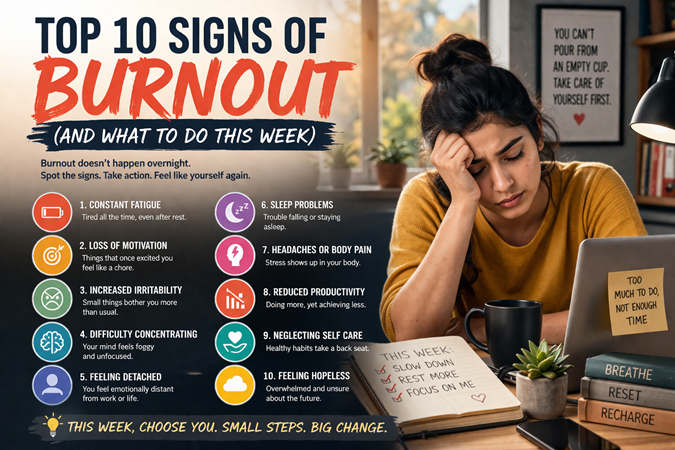
In today’s fast moving world, burnout has quietly become one of the biggest lifestyle challenges. Whether you are a student, working professional, or entrepreneur, constant pressure, long hours, and digital overload can drain your energy without you even realizing it.
Burnout is not just about feeling tired. It is a state of emotional, mental, and physical exhaustion that affects your productivity, relationships, and overall well being. The problem is that many people ignore the early warning signs until it becomes overwhelming.
The good news is that burnout can be identified early and managed effectively. In this guide, you will learn the top 10 signs of burnout and simple actions you can take this week to regain control of your energy and focus.
1. Constant Fatigue Even After Rest
One of the earliest signs of burnout is feeling tired all the time, even after a full night’s sleep. You wake up feeling drained instead of refreshed.
This happens because burnout affects your mental energy, not just physical tiredness. Your mind stays overloaded, preventing true recovery.
This week, focus on improving your sleep quality and reducing late night screen time. Even small changes in your evening routine can help restore energy levels.
2. Loss of Motivation
Tasks that once felt exciting now feel like a burden. You may find yourself procrastinating or avoiding responsibilities.
This loss of motivation is a clear signal that your mind needs a break. It is not laziness, it is exhaustion.
Start by setting smaller, achievable goals for the week. Completing small tasks can rebuild momentum and confidence.
3. Increased Irritability
Burnout often shows up as frustration over small things. You may feel irritated with colleagues, family, or even minor inconveniences.
This happens because your emotional capacity is already stretched.
To manage this, take short breaks during the day and practice mindful breathing. Even a few minutes of calm can reduce stress levels significantly.
4. Difficulty Concentrating
If you find it hard to focus on simple tasks or frequently lose track of what you are doing, burnout could be the reason.
Mental fatigue reduces your ability to concentrate and make decisions.
This week, try working in focused time blocks. Avoid multitasking and give your full attention to one task at a time. This improves both efficiency and mental clarity.
5. Feeling Detached or Disconnected
Burnout can make you feel emotionally distant from your work or personal life. You may feel like you are just going through the motions without any real connection.
This detachment is a coping mechanism your brain uses to deal with overload.
Reconnect with activities you enjoy, even if it is just for 20 minutes a day. This helps restore emotional balance.
6. Changes in Sleep Patterns
Burnout can disrupt your sleep cycle. You may experience insomnia, difficulty falling asleep, or waking up frequently at night.
Poor sleep further worsens burnout, creating a cycle that is hard to break.
Focus on maintaining a consistent sleep schedule this week. Avoid caffeine late in the day and create a relaxing bedtime routine.
7. Frequent Headaches or Body Pain
Physical symptoms like headaches, muscle tension, and body aches are common signs of burnout.
Stress causes your body to stay in a constant state of tension, which leads to discomfort.
Incorporate light physical activity like walking or stretching into your daily routine. This helps release tension and improve overall well being.
8. Reduced Productivity
Even if you are working long hours, you may notice that your output is decreasing. Tasks take longer to complete, and mistakes become more frequent.
This is a classic sign that your mind is overloaded.
Instead of pushing harder, take strategic breaks and prioritize important tasks. Quality work always beats quantity.
9. Loss of Interest in Self Care
When burnout sets in, basic self care habits like eating healthy, exercising, or maintaining hygiene may start to decline.
You may feel like you do not have the energy or time for yourself.
This week, focus on rebuilding one simple habit, such as a short walk, a healthy meal, or proper hydration. Small steps can create a big impact over time.
10. Feeling Hopeless or Overwhelmed
One of the most serious signs of burnout is feeling stuck, overwhelmed, or hopeless about your situation.
You may feel like no matter what you do, things will not improve.
It is important to address this early. Talk to someone you trust, whether it is a friend, family member, or mentor. Sharing your thoughts can provide relief and perspective.
What to Do This Week to Recover from Burnout
Recovering from burnout does not require drastic changes. It starts with small, intentional actions.
Begin by simplifying your schedule. Identify tasks that are not urgent and postpone or delegate them. This reduces immediate pressure.
Next, focus on your physical health. Prioritize sleep, eat balanced meals, and include some form of movement in your day. Even light exercise can boost your mood and energy.
Digital detox is another powerful step. Limit unnecessary screen time, especially social media, which often adds to mental clutter.
You should also create moments of relaxation in your day. This could be listening to music, reading, or spending time in nature. These activities help your mind reset.
If possible, revisit your goals and priorities. Sometimes burnout occurs because you are working on things that do not align with your values. Realigning your focus can bring clarity and motivation.
Conclusion
Burnout is not a sign of weakness, it is a signal that something in your lifestyle needs attention. Ignoring it can lead to long term health issues, but addressing it early can help you regain control quickly.
By recognizing the signs and taking simple steps this week, you can start your recovery journey. Focus on rest, balance, and consistency rather than perfection.
If you found this guide helpful, consider exploring more lifestyle content on stress management, productivity, and wellness. Small changes today can lead to a healthier and more balanced life tomorrow.


