




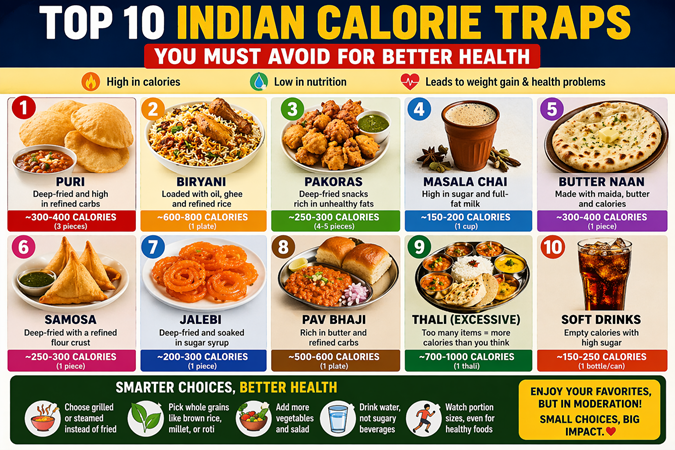
Indian food is rich, diverse, and deeply satisfying. However, many everyday foods that seem harmless can quietly add excess calories to your diet. These “calorie traps” are often hidden in plain sight, part of daily meals, snacks, and beverages that we consume without a second thought. Over time, these extra calories can lead to weight gain, low energy levels, and even lifestyle-related health issues.
The good news is that you don’t need to give up your favorite foods completely. With a few smart swaps and mindful choices, you can enjoy Indian cuisine while keeping your calorie intake in check. In this guide, we explore the top 10 calorie traps Indians eat daily and provide practical, easy alternatives that fit seamlessly into your routine.
What Are Calorie Traps and Why Should You Care
Calorie traps are foods or eating habits that pack more calories than you realize, often without providing enough nutrition or satiety. These foods are usually high in refined carbs, sugar, unhealthy fats, or hidden oils. Because they are part of daily routines, breakfast items, tea time snacks, or quick meals, they often go unnoticed.
Understanding these traps is essential for maintaining a healthy weight and improving overall well-being. Small daily changes can create a big impact over time.
1. Chai with Sugar and Full-Fat Milk
For many Indians, the day starts and ends with chai. While comforting, a typical cup made with sugar and full-fat milk can add significant calories, especially if consumed multiple times a day.
A better alternative is to reduce sugar gradually or switch to jaggery in small amounts. You can also use low-fat milk or try herbal teas. Cutting down from three cups to one or two can make a noticeable difference without sacrificing your routine.
2. Parathas Loaded with Ghee or Butter
Parathas are a staple breakfast option, but the generous use of ghee or butter turns them into a calorie-dense meal. Stuffed versions like aloo or paneer parathas can further increase the calorie count.
Instead, opt for dry roasted or lightly brushed parathas. You can also switch to whole wheat roti with vegetable fillings on the side. Using minimal oil and adding fiber-rich vegetables makes the meal healthier and more filling.
3. Fried Snacks Like Samosa and Pakora
Evening snacks such as samosas and pakoras are deeply ingrained in Indian culture. However, deep frying significantly increases their calorie content.
A smarter choice is to bake or air-fry these snacks. You can also replace them with roasted chana, sprouts chaat, or homemade vegetable cutlets cooked with minimal oil. These options provide better nutrition while satisfying your cravings.
4. Biscuits with Tea
It is easy to underestimate how many biscuits you consume with tea. Most packaged biscuits contain refined flour, sugar, and unhealthy fats, making them a hidden calorie source.
Switching to healthier options like whole grain crackers or nuts can help. Even better, try having tea without any accompaniment occasionally. This small habit change can significantly cut down unnecessary calorie intake.
5. White Rice in Large Portions
Rice is a staple in many Indian households, especially in the south and east. While it is not unhealthy by itself, large portions of white rice can quickly add up in calories and spike blood sugar levels.
You can manage this by reducing portion size and combining rice with more vegetables and protein. Alternatively, try brown rice, millets, or quinoa for better fiber and nutrient content.
6. Sugary Desserts After Meals
Desserts like gulab jamun, kheer, or halwa are often consumed after meals or during celebrations. While delicious, they are high in sugar and fats.
Instead of completely avoiding sweets, practice portion control. You can also explore healthier versions made with jaggery, dates, or reduced sugar. Fresh fruits or yogurt-based desserts are excellent alternatives that satisfy sweet cravings with fewer calories.
7. Street Food Indulgence
Street food like chaat, pani puri, and pav bhaji is tempting and widely available. However, these foods often contain excess oil, refined ingredients, and hidden calories.
If you enjoy street food, try making it at home with healthier ingredients and controlled oil usage. Homemade chaat with boiled potatoes, chickpeas, and fresh chutneys can be both tasty and nutritious.
8. Packaged Fruit Juices
Many people consider packaged fruit juices a healthy option, but they are often loaded with added sugars and lack fiber.
A better option is to eat whole fruits or prepare fresh juices without added sugar. Smoothies with whole fruits and nuts can also provide more nutrition and keep you full longer.
9. Late-Night Snacking
Late-night snacking is a common habit, especially with busy schedules or screen time. Foods like chips, instant noodles, or sweets consumed at night can easily become calorie traps.
Try replacing these with lighter options like fruits, nuts, or a glass of warm milk. Setting a fixed time for dinner and avoiding eating after that can also help regulate your calorie intake.
10. Overuse of Cooking Oil
Oil is an essential part of Indian cooking, but excessive use can significantly increase calorie content. Even healthy oils can contribute to weight gain if used in large amounts.
Measuring oil instead of pouring directly from the bottle is a simple yet effective strategy. Using non-stick cookware, steaming, or grilling methods can further reduce oil usage without compromising taste.
How to Make Sustainable Changes
Making healthier choices does not mean completely overhauling your diet overnight. Start with small, manageable changes. Focus on one or two habits at a time, such as reducing sugar in tea or cutting down fried snacks.
Consistency is more important than perfection. Over time, these small changes become part of your lifestyle and lead to lasting results.
Internal Linking Opportunities for Better Health
If you are building a health-focused blog, consider linking this article to related topics such as healthy Indian breakfast ideas, weight loss meal plans, or low-calorie Indian recipes. This not only improves SEO but also keeps readers engaged and informed.
Conclusion
Calorie traps are everywhere in our daily diet, but awareness is the first step toward change. By identifying these hidden sources of excess calories and making simple swaps, you can enjoy your favorite Indian foods without compromising your health.
Remember, the goal is not restriction but balance. With mindful eating and smarter choices, you can create a sustainable and enjoyable approach to healthy living.
If you found this guide helpful, share it with friends and family who want to eat healthier without giving up their favorite foods. Small changes today can lead to a healthier tomorrow.


