




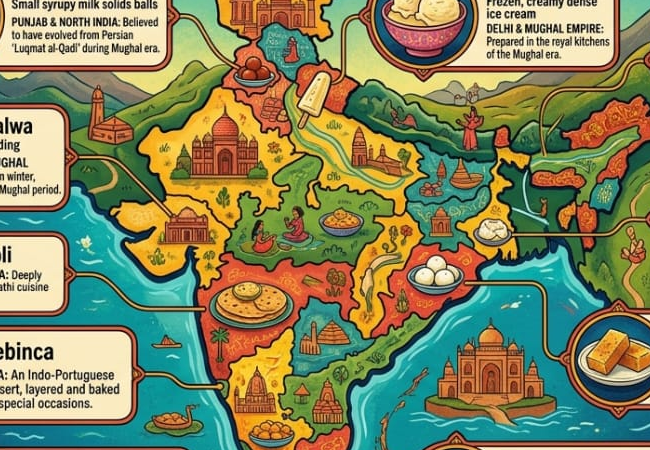
India’s culinary heritage is incomplete without its extraordinary range of desserts. From syrup-soaked delicacies to creamy, slow-cooked sweets, every region of India has contributed something unique to the country’s dessert culture. These sweets are not just food, they carry stories of tradition, celebration, and regional pride. If you’re exploring Indian cuisine or looking to understand its rich diversity, this guide to the top 10 iconic Indian desserts and their origins will give you everything you need in one place.
Introduction to Indian Desserts
Indian desserts are deeply tied to festivals, rituals, and everyday indulgence. Whether it’s a wedding, a religious celebration, or simply a family gathering, sweets play a central role. What makes Indian desserts special is their diversity in ingredients and preparation techniques. From milk-based sweets in the north to rice and coconut-based delicacies in the south, each dessert reflects the geography and culture of its origin.
Let’s explore the most iconic Indian desserts and discover where they come from.
1. Gulab Jamun – North India
Gulab Jamun is perhaps the most recognized Indian dessert globally. Originating from North India, this soft, melt-in-the-mouth sweet is made from khoya, deep-fried, and soaked in sugar syrup flavored with rose water and cardamom.
Its roots are believed to trace back to Persian influences during the Mughal era. Today, it is a staple at weddings, festivals, and celebrations across India. The richness and simplicity of Gulab Jamun make it a universal favorite.
2. Rasgulla – West Bengal
Rasgulla, a spongy and syrupy delight, is synonymous with West Bengal. Made from chhena (fresh cottage cheese), these soft balls are cooked in light sugar syrup, resulting in a juicy and refreshing dessert.
There has been a long-standing debate between West Bengal and Odisha over its origin, but it is widely associated with Bengali cuisine. Rasgulla represents the delicate balance of sweetness and texture that defines many Eastern Indian sweets.
3. Jalebi – North India
Jalebi is a crispy, spiral-shaped dessert soaked in sugar syrup, commonly found in North India. Made by deep-frying fermented batter and then immersing it in syrup, Jalebi is known for its crunchy exterior and juicy interior.
Although it has Middle Eastern origins, Jalebi has become an integral part of Indian street food culture. It is often enjoyed hot, sometimes paired with milk or even savory dishes like poha.
4. Mysore Pak – Karnataka
Mysore Pak originates from the royal kitchens of Mysore in Karnataka. This rich dessert is made from gram flour, sugar, and a generous amount of ghee.
It was first created in the palace of the Maharaja of Mysore, and its name literally means “sweet from Mysore.” The traditional version is dense and crumbly, while modern variations are softer and melt in the mouth.
5. Kaju Katli – North India
Kaju Katli is a premium Indian sweet made from cashew nuts, sugar, and a touch of cardamom. Known for its diamond shape and smooth texture, it is especially popular during festivals like Diwali.
Although widely consumed across India, it is believed to have originated in North India, particularly within royal kitchens where nuts and dry fruits were commonly used in desserts.
6. Payasam – South India
Payasam is a traditional South Indian dessert made with milk, sugar or jaggery, and ingredients like rice, vermicelli, or lentils. It is often flavored with cardamom, nuts, and raisins.
Each South Indian state has its own variation of Payasam. In Kerala, it is known as “Pradhaman” and often uses coconut milk instead of dairy. Payasam is an essential part of festive meals and temple offerings.
7. Sandesh – West Bengal
Another gem from West Bengal, Sandesh is a light and delicate sweet made from fresh chhena. Unlike Rasgulla, Sandesh is not soaked in syrup but is lightly sweetened and often flavored with saffron, pistachios, or rose.
It is considered a sophisticated dessert and is often shaped into artistic forms. Sandesh reflects the refined dessert-making tradition of Bengal.
8. Peda – Uttar Pradesh
Peda is a simple yet flavorful sweet that originates from Mathura in Uttar Pradesh. Made from khoya, sugar, and flavored with cardamom, Peda has a slightly grainy texture and rich taste.
Mathura Peda is particularly famous and is closely associated with religious offerings, especially in temples dedicated to Lord Krishna.
9. Ladoo – Pan-India with roots in ancient India
Ladoo is one of the oldest known Indian sweets, with references found in ancient texts. It is made in various forms using ingredients like gram flour, semolina, coconut, or even edible gums.
While Ladoo is prepared across India, its origins can be traced back to ancient medicinal practices where it was used as a delivery system for herbs. Today, it is a must-have during festivals like Diwali and Ganesh Chaturthi.
10. Kulfi – Mughal India
Kulfi is India’s traditional frozen dessert, often compared to ice cream but denser and creamier. It originated during the Mughal period and is made by slow-cooking milk until it thickens, then freezing it in molds.
Popular flavors include pistachio, mango, and saffron. Kulfi is widely sold by street vendors and remains a nostalgic treat for many Indians.
Why Indian Desserts Stand Out
Indian desserts are unique because they are deeply rooted in tradition and often made using time-intensive methods. The use of ingredients like ghee, cardamom, saffron, and nuts gives them a distinct flavor profile.
Unlike Western desserts, which often rely on baking, many Indian sweets are cooked on stovetops, deep-fried, or slow-simmered. This creates a variety of textures and tastes that are hard to replicate.
Tips to Explore Indian Desserts
When exploring Indian desserts, it’s best to try them in their region of origin whenever possible. The authenticity and freshness make a significant difference in taste.
You can also explore local sweet shops, known as “mithai shops,” which specialize in traditional sweets. Many of these shops have been running for generations and maintain age-old recipes.
Conclusion
Indian desserts are more than just sweets, they are a reflection of the country’s cultural diversity and culinary richness. From the syrupy goodness of Gulab Jamun to the delicate elegance of Sandesh, each dessert tells a story of its origin and tradition.
If you’re a food lover or someone exploring Indian cuisine, these iconic desserts are a must-try. They offer not just flavors but an experience that connects you to India’s heritage.


