





You open your bank app thinking you should still have enough left, but the number staring back feels lower than expected. You didn’t make any big purchases, didn’t go on a trip, and yet your money is almost gone. This is where most students feel confused and even a little guilty. The truth is, you’re not bad with money. You just don’t have a system guiding it. In 2026, where spending is just one tap away through UPI and digital apps, money disappears faster than ever. Zero-based budgeting solves this problem by giving every rupee a clear purpose before you spend it.
What Zero-Based Budgeting Really Means
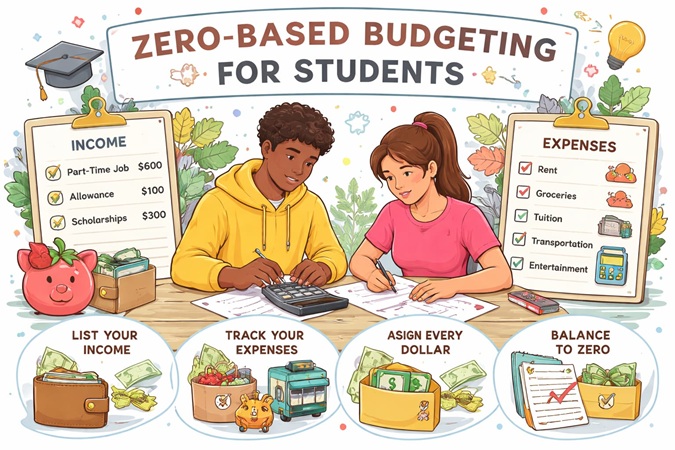
Zero-based budgeting is a simple but powerful concept. It means assigning every rupee you have to a specific role so that your income minus your expenses equals zero. This doesn’t mean you spend everything. It means nothing is left unplanned. Some money goes to essentials, some to lifestyle, some to savings, and some to things you genuinely enjoy. For students, this method works perfectly because income is often limited and inconsistent. Instead of guessing how long your money will last, you decide exactly how it will be used.
Why Students Lose Money Without Realizing It
Most students don’t lose money through big expenses. It’s the small, repeated spending that causes the damage. A coffee here, a snack there, a quick ride, or a late-night order doesn’t feel like much in the moment. But over time, these small amounts quietly add up. In a digital-first world, spending feels effortless and almost invisible. Without a system, your money flows based on impulse. With zero-based budgeting, your money flows based on intention.
How to Start Zero-Based Budgeting Without Overthinking
Starting is easier than it seems. First, look at your actual monthly income. This could be pocket money, part-time earnings, or freelance income. Let’s say it’s ₹10,000. Now begin assigning that money to different areas of your life. Essentials come first, including food, transport, phone bills, and study-related expenses. After that, allocate money for lifestyle needs such as eating out, entertainment, and subscriptions. Then assign a portion to savings, even if it feels small. By the end, your entire ₹10,000 should be planned. Nothing should be left without a purpose.
The Shift That Changes Your Financial Life
The biggest transformation with zero-based budgeting is mental. You stop reacting to your spending and start controlling it. Instead of asking if you can afford something, you already know because you’ve planned for it. This removes guilt and confusion. Spending becomes intentional rather than emotional. Over time, this mindset builds confidence because you’re no longer guessing where your money is going.
A Real Student Example You Can Relate To
Consider a student named Ananya who receives ₹12,000 a month. Earlier, her money would run out before the end of the month, leaving her stressed and restricted. After starting zero-based budgeting, she divided her money into essentials, lifestyle, savings, and a small buffer. The first month wasn’t perfect, but she learned where she was overspending. By the third month, she was no longer running out of money. She didn’t increase her income, but she improved how she managed it. That change made her feel more in control and less anxious.
Why Saving Feels Impossible but Isn’t
Saving money as a student feels difficult because income is limited. Many students think they will start saving once they earn more. But the problem is not income, it’s priority. If saving depends on leftover money, it rarely happens. Zero-based budgeting fixes this by making saving part of your initial plan. Even a small amount builds consistency. Over time, this habit becomes more valuable than the amount itself.
The Emotional Side of Spending
Spending is not always logical. You spend when you feel bored, stressed, or even happy. Social media in 2026 makes this even more intense by constantly showing a lifestyle that feels tempting to match. Zero-based budgeting doesn’t stop you from enjoying life. It simply helps you do it consciously. When your spending is planned, you enjoy it without guilt because you know it fits within your budget.
Handling Unexpected Expenses Without Stress
Unexpected expenses are part of life. A sudden plan, a college fee, or an emergency can disrupt your budget. Without a system, this creates panic. With zero-based budgeting, you already know where your money is allocated. This makes it easier to adjust. You can shift money from one category to another without losing control. Instead of reacting emotionally, you respond with clarity.
Turning Budgeting Into a Habit
At first, budgeting may feel like effort. You might need to track expenses and review your plan regularly. But with time, it becomes natural. You start thinking before spending and become more aware of your choices. Budgeting stops feeling like a restriction and starts feeling like control. This habit not only helps you during college but also prepares you for future financial responsibilities.
The Biggest Mistake Students Make
The most common mistake is expecting perfection. Your first budget will not be accurate. You will forget expenses and overspend in certain areas. That is completely normal. Zero-based budgeting is not about perfection. It is about learning and improving. Each month helps you understand your habits better, making your system stronger over time.
Why This Skill Matters for Your Future
Managing money as a student may seem like a small responsibility, but it has a long-term impact. The habits you build now will shape how you handle money in the future. If you learn to manage a small income effectively, handling a larger income becomes easier. If you ignore it now, the same problems will follow you later. Zero-based budgeting is not just a short-term fix, it is a life skill.
Conclusion: Take Control Before It Slips Away
Zero-based budgeting is not about limiting your lifestyle. It is about designing it with intention. Instead of wondering where your money went, you decide where it goes. As a student, you may not have a large income, but you have the ability to manage it wisely. Start with what you have, assign every rupee a purpose, and stay consistent. Over time, this simple system will give you clarity, confidence, and financial control.