




7 Hidden Gems of Lucknow That Made Me Feel the City, Not Just See It

- PublishedApril 18, 2026
Everyone talks about Lucknow’s famous spots—Bara Imambara, Rumi Darwaza, and the buzzing galiyaan of the old city. And yes, they’re beautiful. But let me be honest—my most memorable moments in Lucknow didn’t happen in those crowded places.
Everything was beautiful, no doubt. But somewhere between the crowds and constant movement, I felt like I was just seeing the city, not really experiencing it.
They happened in the quiet corners, and the places where no one was rushing.
Where history didn’t feel like a chapter in a book—but something you could actually feel.
Out of curiosity, I started exploring some lesser-known historical sites. I didn’t expect much. But what I found completely changed how I see this city.
These aren’t just places. These are experiences.
1. Dilkusha Kothi: Where Time Feels Suspended

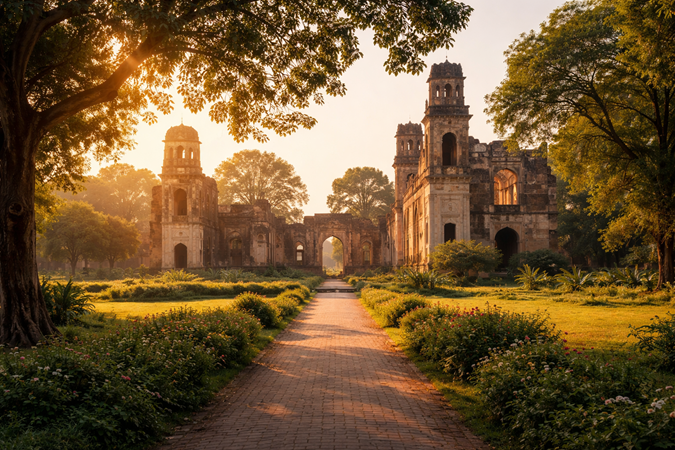
Dilkusha Kothi is not just a ruin—it’s a memory frozen in time. Built in the early 19th century by British Resident Major Gore Ouseley, it was designed as a hunting lodge inspired by English Baroque architecture. Unlike Mughal or Nawabi structures, its European style immediately stands out.
But what gives this place emotional weight is its connection to the Indian Rebellion of 1857. During the revolt, this structure witnessed intense conflict. Today, only skeletal remains stand—no roof, broken walls—but that emptiness is exactly what makes it powerful.
Walking inside, you’ll notice something unusual: silence that feels heavy. The open sky replaces ceilings, birds echo through hollow halls, and the wind moves freely through history. You’re not guided by signs or crowds—you’re guided by imagination.
For a first-time visitor, this is where Lucknow stops being a tourist city and starts feeling real. It’s not polished or curated—it’s raw.
The moment I entered Dilkusha Kothi, I felt different kind of calm. Broken walls, open skies, and silence all around—it almost felt like time had stopped there. There were no crowds, no distractions, just me and the ruins. I stood there imagining what this place must have seen during 1857.The broken walls, the open sky, and the stillness around me created a kind of silence that felt almost heavy.
And suddenly, For the first time, history didn’t feel like something I had read about. It felt real, and strangely personal. It felt real… and a little heavy.
Timings: Sunrise to Sunset
Entry Fee: Free
How to Reach:
- From Charbagh Railway Station: ~6 km, take auto or cab (15–20 min)
- From Alambagh Bus Stand: ~7 km
- From Chaudhary Charan Singh Airport: ~14 km
Search “Dilkusha Kothi” on Google Maps for exact navigation.
2. Chhatar Manzil: Grace That Slows You Down

Chhatar Manzil, meaning “Umbrella Palace,” was once the residence of the Nawabs of Awadh. Its most distinctive feature is the dome shaped like an umbrella (chhatar), symbolizing royal protection.
Built along the Gomti River, it blends Mughal and European architectural styles—a reflection of Lucknow’s cultural fusion. Over time, it has served various purposes, including a scientific research institute.
But what makes it special isn’t just its history—it’s its atmosphere. The space feels calm, almost meditative. Unlike crowded monuments, this place invites you to slow down. You’ll find yourself walking without urgency, observing details you’d normally ignore.
Chhatar Manzil felt soft and graceful, like it didn’t need attention to prove its beauty. Walking around, I noticed how peaceful everything felt.
I wasn’t rushing. I wasn’t checking my phone. I was just walking slowly, taking things in. The place has this quiet elegance that doesn’t try too hard, and maybe that’s what makes it special.
The architecture is stunning, but what stayed with me was the vibe—it makes you slow down. No rush, no noise… just quiet elegance.
Timings: 10:00 AM – 5:00 PM (may vary depending on restoration work)
Entry Fee: Usually free or minimal
How to Reach:
- From Charbagh: ~5 km
- From Airport: ~13 km
- Easily accessible by cab/auto
3. Safed Baradari: The Art of Stillness

Safed Baradari, meaning “White Pavilion,” was built by Nawab Wajid Ali Shah as a mourning hall (Azakhana). It was used for Shia religious gatherings, especially during Muharram.
Architecturally, it’s symmetrical, elegant, and minimalistic. But what truly defines this place is its emotional tone. The white structure reflects sunlight beautifully, creating a calm, almost therapeutic environment.
For a traveler, this place offers something rare: stillness without effort. You don’t need to try to relax here—it just happens.Sitting here, even for a few minutes, feels like stepping out of time.This place surprised me with how calming it was. The white structure, the open space, the way sunlight reflects—it all creates a peaceful atmosphere. I remember just sitting there for a while, doing absolutely nothing, and somehow feeling better.
In a time where I’m always doing something or going somewhere, this place reminded me what it feels like to just pause. It sounds simple, but it stayed with me longer than I expected. It’s rare to find a place that makes you pause without forcing you to.
Timings: 8:00 AM – 6:00 PM
Entry Fee: Free
How to Reach:
- Near Hazratganj (~3–4 km from Charbagh)
- Well connected via auto, cab, and city buses
4. La Martinière College (Constantia): Where History Lives On

La Martinière College, also known as Constantia, was founded by French adventurer Major General Claude Martin in 1845. It’s one of the most unique school campuses in the world—part palace, part fortress, part museum.The building itself is a masterpiece of Indo-European architecture. What’s fascinating is that it’s still a functioning school.
For a tourist, this creates a surreal experience—watching students casually walk through corridors that are older than most monuments. It reminds you that history isn’t always preserved behind ropes—it sometimes lives on.
This one was unexpected. A school that looks like a palace? It felt surreal.
Watching students casually walking through such a historic space made me realize something—history doesn’t always belong to the past. Sometimes, it lives on quietly in everyday life. That thought stayed with me longer than I expected.
Timings: Limited visitor access (usually outside school hours)
Entry Fee: Free or restricted
How to Reach:
- ~4 km from Charbagh
- ~12 km from Airport
5. Husainabad Clock Tower: When Time Slows Down

Built in 1881, this is India’s tallest clock tower, inspired by London’s Big Ben. It was constructed to mark the arrival of Sir George Couper, the first Lieutenant Governor of Awadh. But beyond facts, the experience matters more—especially at sunset. The golden light hits the tower, softening everything around it. It doesn’t dominate the space—it observes it.
For first-time visitors, this is the perfect pause point. No rush, no checklist—just a moment of quiet.
I reached here just before sunset, and honestly, perfect timing. I couldn’t have timed it better. The light made everything look softer, almost peaceful. The golden light hitting the tower made it look almost magical. It stands tall, but not in a show-off way—more like a calm observer of everything around it. I just stood there for a few minutes, doing nothing, and felt this strange sense of peace.
The environment and peace around there was that I just loved it.
Timings: Open 24 hours (best at sunset)
Entry Fee: Free
How to Reach:
- Near Bara Imambara (~6 km from Charbagh)
6. Tomb of Saadat Ali Khan: A Space for Reflection

This tomb belongs to Nawab Saadat Ali Khan, the first Nawab of Awadh under British influence. Built in Mughal style, it features domes, arches, and symmetrical gardens.
But what defines this place is balance—everything feels aligned, calm, and intentional.
As a visitor, you’ll notice your thoughts slowing down. It’s not just peaceful—it’s grounding.
This place had a different kind of silence—one that makes you automatically lower your voice. The symmetry, the greenery, the stillness… everything felt balanced.
The symmetry, the greenery, the overall balance of the place made everything feel calm. I found myself thinking, but not in a chaotic way. My thoughts felt clearer, slower. It made me reflect, not just on history, but on life in general. It’s the kind of place where your thoughts slow down.
Timings: 6:00 AM – 6:00 PM
Entry Fee: Free
How to Reach:
- ~5 km from Charbagh
- Easy access via cab/auto
7. Musa Bagh: The Joy of Getting Lost

Musa Bagh was once a grand garden palace built by Nawab Asaf-ud-Daula. It also played a role during the 1857 rebellion.
Today, it’s less maintained—but that’s its charm. It feels untouched, raw, and real.For a tourist, this is where exploration becomes personal. No crowds, no structure—just curiosity.
You don’t “visit” Musa Bagh—you discover it.
Musa Bagh felt like a hidden world. Not perfectly maintained, not crowded—just raw and real. I walked around without any plan, just exploring. And honestly, that’s what made it special. It didn’t feel like a “tourist spot.” It felt like a discovery.I walked around without any plan, just exploring whatever caught my attention. And that’s what made it special. It didn’t feel like I was visiting a tourist spot. It felt like I had discovered something on my own.
Timings: Sunrise to Sunset
Entry Fee: Free
How to Reach:
- ~10 km from Charbagh
- Best reached via cab
Why These Hidden Gems Matter in Modern Travel
Travel in 2026 is faster, more digital, and more predictable than ever before. Social media tells us where to go, what to see, and even how to experience it. While this makes planning easier, it often takes away the element of surprise. Hidden places like these in Lucknow bring that surprise back. They allow you to create your own experience instead of following someone else’s. They remind you that travel is not just about destinations, but about moments—moments of silence, reflection, and connection.
Travel today is fast and predictable. Social media tells us where to go and how to feel.
But these places? They give that control back to you.
They don’t demand attention—they reward curiosity.
Final Thoughts: The Lucknow You’ll Never Forget
What I loved most about these places wasn’t just their history—it was the quiet. In a city full of life and noise, these spots gave me space to think, feel, and connect.
In a city full of energy and life, these quiet corners offered something different. They gave me space to slow down, to observe, and to connect with Lucknow on a deeper level.
So if you ever visit Lucknow, don’t just follow the crowd.
Take a detour. Get a little lost.
Because sometimes, the places no one talks about… are the ones you’ll never forget.