





10 Common Skincare Mistakes for Oily Skin in India and Easy Fixes
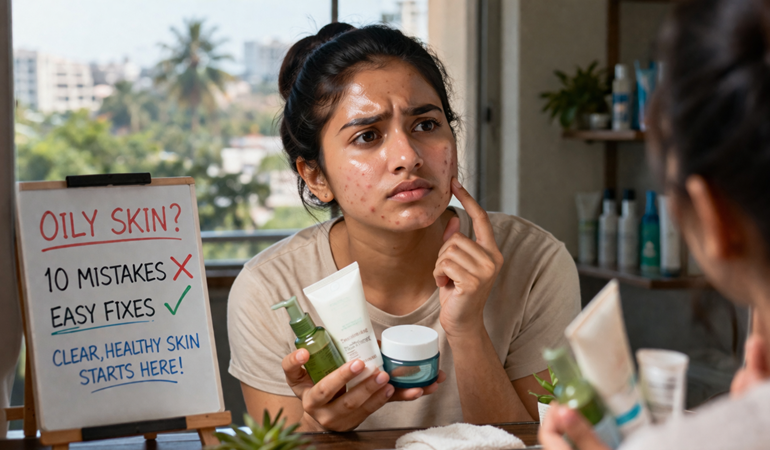

Managing oily skin in Indian weather can feel like a constant struggle. With high humidity, intense heat, dust, and pollution, your skin produces excess oil, leading to acne, clogged pores, and dullness. Many people try multiple products but still fail to see results because they unknowingly follow the wrong skincare habits.
The truth is, oily skin does not need harsh treatment, it needs the right balance. In this guide, you will discover the top 10 skincare mistakes for oily skin in Indian weather and learn how to fix them effectively. These insights will help you build a routine that actually works in real life conditions.
1. Overwashing Your Face
It may seem logical to wash your face frequently to remove oil, but overwashing can actually make your skin worse. When you strip away natural oils too often, your skin compensates by producing even more oil.
This leads to a cycle of excessive oiliness and breakouts. In Indian climates, where sweating is already high, this mistake is very common.
The better approach is to wash your face two to three times a day with a gentle cleanser. This keeps your skin clean without disturbing its natural balance.
2. Skipping Moisturizer
Many people with oily skin believe that moisturizer will make their face more greasy, so they skip it entirely. This is a major mistake.
When your skin lacks hydration, it produces more oil to compensate. This results in shinier and more acne prone skin.
Using a lightweight, oil free, or gel based moisturizer helps maintain hydration without clogging pores. In hot and humid Indian weather, this step is essential for controlling oil production.
3. Using Harsh or Alcohol Based Products
Strong face washes, toners, and scrubs that contain alcohol can feel effective initially because they remove oil instantly. However, they damage the skin barrier over time.
This leads to irritation, redness, and increased oil production. Indian skin exposed to sun and pollution is already under stress, and harsh products only make things worse.
Switch to gentle, pH balanced products that clean your skin without stripping it completely.
4. Not Using Sunscreen Daily
Skipping sunscreen is one of the biggest skincare mistakes in India. Many people avoid it because they think it makes their skin oily or sticky.
Sun exposure increases oil production and worsens acne marks and pigmentation. Without sunscreen, your skincare routine is incomplete.
Choose a lightweight, matte finish sunscreen designed for oily skin. Applying it daily, even indoors, can protect your skin and improve overall texture.
5. Over Exfoliating the Skin
Exfoliation helps remove dead skin cells and unclog pores, but doing it too often can damage your skin barrier.
Many people with oily skin scrub their face daily, thinking it will reduce oil. Instead, it leads to irritation and more breakouts.
Exfoliating once or twice a week is enough. Use mild chemical exfoliants or gentle scrubs to maintain clear skin without overdoing it.
6. Ignoring Diet and Hydration
Skincare is not just about what you apply on your face. Your diet plays a major role in how your skin behaves.
Consuming too much oily, fried, or sugary food can increase sebum production and trigger acne. Dehydration also makes your skin produce more oil.
Include fruits, vegetables, and sufficient water in your daily routine. A balanced diet supports healthy skin from within.
7. Touching Your Face Frequently
This is a habit many people are not even aware of. Constantly touching your face transfers dirt, bacteria, and oil from your hands to your skin.
In Indian environments with high pollution levels, this can quickly lead to clogged pores and breakouts.
Being mindful of this habit and keeping your hands clean can make a noticeable difference in your skin condition.
8. Using Too Many Products at Once
Trying multiple skincare products at the same time is a common mistake, especially with so many options available today.
Layering too many products can overwhelm your skin, cause reactions, and clog pores. It also becomes difficult to identify what is actually working.
Keep your routine simple. A basic routine of cleanser, moisturizer, and sunscreen is often enough. You can gradually add targeted treatments if needed.
9. Not Removing Makeup Properly
Leaving makeup on your skin overnight is one of the fastest ways to damage your skin. It clogs pores, traps dirt, and leads to breakouts.
Even lightweight makeup needs proper removal, especially in humid Indian weather where sweat mixes with products.
Use a gentle makeup remover or cleansing oil followed by a face wash to ensure your skin is completely clean before bed.
10. Expecting Instant Results
Skincare requires patience. Many people switch products too quickly because they do not see immediate results.
This constant change disrupts your skin and prevents any product from working effectively.
Give your skincare routine at least a few weeks to show results. Consistency is the key to improving oily skin.
How to Build a Simple Routine for Oily Skin
To manage oily skin effectively in Indian weather, focus on consistency and simplicity. Start your day with a gentle cleanser, followed by a lightweight moisturizer and sunscreen.
At night, cleanse your face properly and use a suitable treatment if needed. Avoid experimenting too frequently and stick to products that suit your skin type.
You can also explore related guides on fitness and nutrition, as overall health plays a major role in skin quality.
Conclusion
Oily skin in Indian weather can be challenging, but most problems arise from simple mistakes that are easy to fix. From overwashing to skipping moisturizer, these habits can worsen your skin condition without you realizing it.
By making small changes and following a balanced routine, you can control oil, reduce acne, and achieve healthier skin. Remember, skincare is not about using more products, it is about using the right ones consistently.
If you found this guide helpful, share it with others and explore more health and fitness content to improve your overall lifestyle.